

Free written scope consultation - allowances, timeline, and change-order rules on paper before a single trade is scheduled
Cambria Kitchen Remodeling: The Sacramento Owner’s Guide
If your Cambria countertop has a chip, a cracked seam, or a surface that’s lost its finish, we handle the repair or replacement as part of a full kitchen remodel. In Sacramento, most Cambria kitchen remodeling projects run between $14,000 and $45,000, depending on the slab size, edge profile, and whether we’re also replacing cabinets, island framing, or plumbing fixtures. When a Cambria surface fails, it’s rarely just the countertop. Homeowners usually call us after a dropped cast-iron pan leaves a quarter-sized chip near the sink, or after a seam opens up near the cooktop and the crack starts collecting water. In older Sacramento kitchens, the failure often traces back to what’s underneath: a cabinet box that settled, a substrate that swelled, or an island that was never properly framed for the slab’s weight.
We work with Cambria as one of our documented surface lines, stocked alongside Silestone and Caesarstone for clients who want a traceable manufacturer warranty. The first job is identifying your specific color and finish, because Cambria’s product line has grown well past the original quartz basics. A Torquay slab from 2016 behaves differently than a matte-finish Brittanica from 2021, and the repair approach changes with the finish.
One thing straight from the start: Bradford Remodeling Co Sacramento is an independent contractor, not affiliated with Cambria. We’re authorized to install it, but we don’t speak for their warranty department. What we offer instead is a written scope and a firm price before the first tool comes out, and a one-year guarantee on the work itself.
- Price: $14,000 – $45,000 for a full Cambria kitchen remodel in Sacramento. Countertop-only installation runs $2,000 – $6,500.
- We stock: Cambria-compatible seam adhesive, color-matched epoxy, polishing compounds for gloss and matte finishes, and edge-profile router bits for touch-up work.
- Turnaround: Slab replacement typically takes 5 – 10 business days from template to install. Seam repair and chip fill can be done in a single visit when we carry the pigment on the truck.
- Warranty: Our 365-Day Done Right Promise covers every repair and installation. Free return visit if the work fails within the year.
Which Cambria Models This Applies To
Cambria’s product line breaks into three broad families: the core polished quartz designs (Torquay, Brittanica, Windermere, Ella, and the older classic colors), the matte-finish designs added in the last several years, and the newer high-contrast veined patterns that use a deeper, more saturated pigment system. The finish matters more than the color name when it comes to repair. Polished surfaces take a standard polyester resin fill and can be re-polished to blend. Matte and brushed finishes are much less forgiving: the abrasion from polishing leaves a visible sheen difference, so those repairs are done with a slower, lower-heat compound and often require the tech to blend across a wider area.
To identify your slab, look for the Cambria identity sticker on the underside of the countertop, usually near the sink cutout or along the front edge of an island overhang. The sticker lists the design name, lot number, and date of manufacture. That lot number is the compatibility gotcha: color-matching across lots within the same design name is not always perfect. We order repair pigment by referencing the lot number, not just the design name, because two Torquay slabs poured three years apart can differ enough in background tone that a generic color match will flash at the seam. For slabs installed before 2010, the sticker is often gone, and we color-match by eye against the existing stone using a custom pigment set we keep in the truck.
For an OEM-vs-aftermarket decision: Cambria does not sell repair kits to consumers. The manufacturer refers owners to certified fabricators for seam repair and chip fill. The adhesives and pigments we use are the same professional-grade materials available to certified quartz fabricators, color-matched on site. The material underneath is what determines whether a repair holds. If the cabinet box has settled, the seam adhesive will crack again no matter whose product we use. In Sacramento, the seasonal moisture swing from wet winters to 100-degree inland summers moves wood cabinets enough that a seam filled in January can open slightly by August. Before we touch a Cambria seam, we check the cabinet rail and the substrate level.
Styles & brands we work with







Signs Your Cambria Kitchen Remodeling Is Failing
- A seam opens near the cooktop or behind the sink. This is usually cabinet settlement or a substrate that was never properly shimmed level. The countertop itself isn’t failing – the structure under it is. We remove the old adhesive, re-level the substrate, and re-bond the seam under clamping pressure.
- A chip appears at the sink edge or the corner of the island. Cambria is a dense quartz surface, but a sharp impact from a cast-iron pan or a dropped stockpot will take a chip out of any engineered stone. The edge geometry matters: eased edges fill more cleanly than a radiused bullnose, which requires a sculpted fill that matches the curve.
- The surface develops a dull or hazy patch that soap won’t remove. This is often hard-water etching from Sacramento’s mineral-heavy tap water, which leaves a calcium carbonate film that dulls the gloss. It can also be chemical damage from an aggressive cleaner. We determine which one it is before we pick the repair method, because a polish compound will not fix an etch. The surface needs a light honing or a specific calcium-dissolving treatment.
- A hairline crack runs from the front edge back toward the wall. Cracks in quartz are almost always load-related, not material defects. The slab is bridging an unsupported span, or the cabinet frame has racked. This is not a chip-fill job – the structural issue gets corrected before the surface crack is bonded and re-finished.
- The overhang on an island flexes or bounces when someone leans on it. Overhangs beyond ten inches need corbels, steel brackets, or a sub-support framing. In Sacramento kitchens with Cambria’s heavier slab designs, we regularly see overhangs that were never properly supported at the original install. The bounce is the warning sign; the eventual failure is a stress crack starting at the support point.
See the difference
 Before
 After
After Before
 After
After Before
 After
AfterReplacement Cost & What’s Included
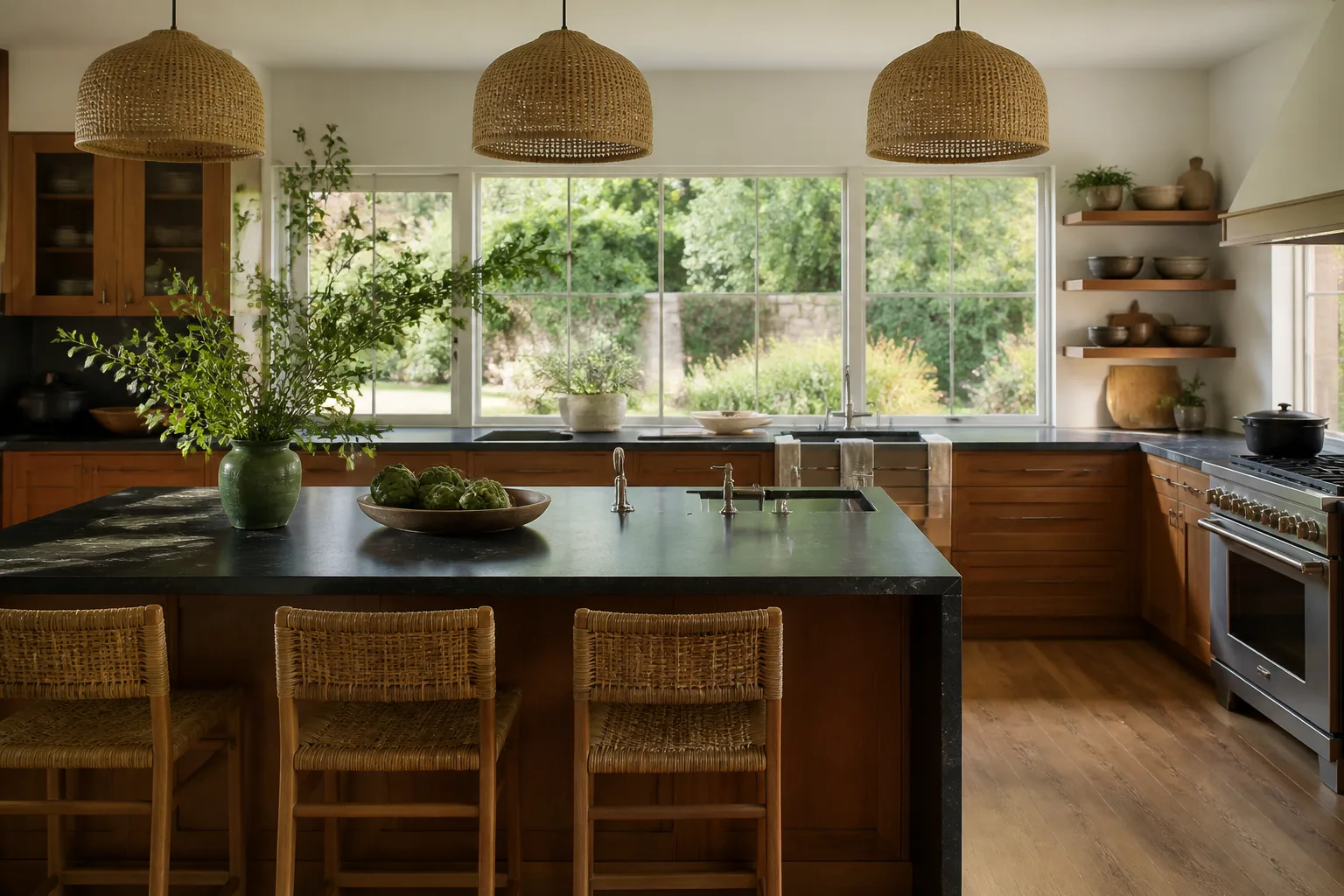
Here’s the math we give a homeowner in Sacramento when they ask about Cambria kitchen remodeling, before we ever see the job:
- Countertop-only replacement (Cambria slab, template, fabrication, install): $2,000 – $6,500, driven by square footage, edge profile, and sink cutout complexity.
- Small kitchen remodel (Cambria tops, stock cabinets, sink and faucet, no layout change): $9,000 – $20,000.
- Full kitchen remodel with Cambria surfaces, semi-custom cabinets, island, backsplash, and lighting: $14,000 – $45,000, with the spread coming from cabinet line, appliance configuration, and whether we’re moving plumbing or electrical.
What drives the cost on the Cambria side is the slab count and the edge detail. Cambria designs with directional veining need more material to match pattern flow at the seams, and a mitered waterfall edge on an island costs substantially more than a standard eased edge because it doubles the visible square footage and requires a second fabrication pass. Sacramento labor rates are stable, but the slab pricing comes from the fabricator’s current Cambria lot inventory, which is why we quote the surface line as a separate line item on the written estimate. Nobody wants a countertop price that shifts because the supplier moved inventory, and with us, that line is fixed before work begins.
What’s included in every one of our quotes: demolition and disposal of the failed surface, substrate inspection and repair if needed, slab template and fabrication, professional installation with seam bonding and color-matched pigment, sink and faucet re-installation, plumbing reconnection, and a site walk after the job is done. The written price covers all of it. No number moves at the door. We also include the signed 365-Day Done Right Promise in your packet when the job closes, so you have the guarantee in writing, not just a handshake.
DIY or Call Us?
Be careful here, because a Cambria slab is engineered quartz, not natural stone, and the resin content means the wrong abrasive can permanently change the finish. You can safely inspect your own countertop: run a straightedge across the surface to check for dip, look under the sink cutout for swelling or dark staining on the substrate, and check whether the island overhang flexes under pressure. You can also wipe the surface with a neutral pH cleaner and a soft cloth – that fixes half the dull-patch calls we take in Sacramento.
What you should not do is attempt a chip fill or seam repair with a store-bought epoxy kit. The color match will be wrong, the resin will yellow under Sacramento’s UV-heavy summer sun, and a poorly bonded seam will hold water and promote mildew under the surface. This is not a danger in the same way a garage spring is, but a failed DIY repair complicates a professional fix, and sometimes requires removing more material to correct the mistake. If you’re seeing a chip, a seam that’s opened, or a dull patch that won’t come back with a proper cleaner, call us at (279) 226-1509. We’ll give you a straight answer on what’s fixable and what needs a new slab, and the estimate is free.
FAQs
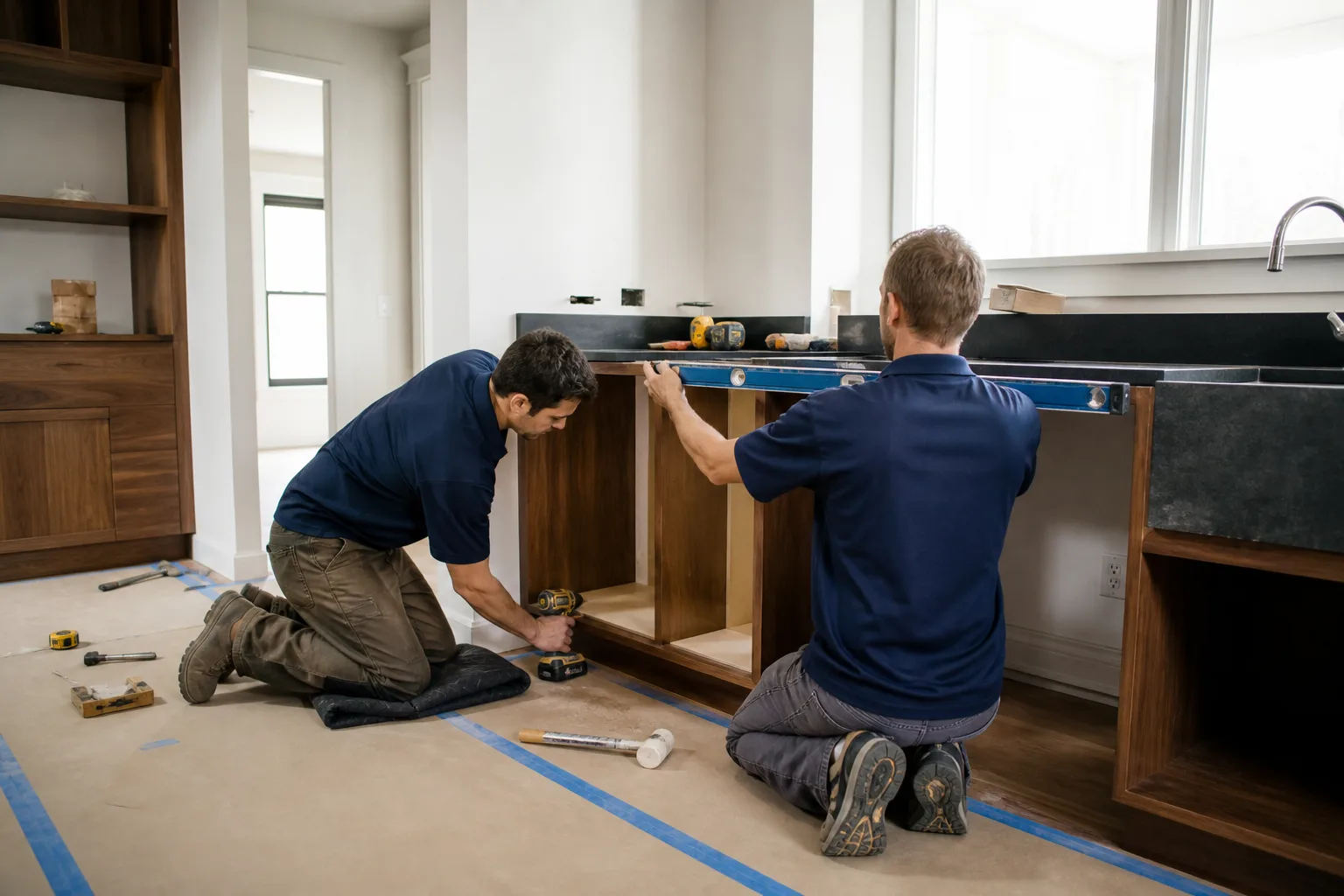
With proper substrate support and normal use, a Cambria slab will last 20 to 30 years before replacement, and many outlast the cabinets underneath them. The limiting factor in Sacramento is rarely the quartz itself – it’s the wood structure under it moving through wet winters and hundred-degree summers. A well-braced cabinet run extends the life of the slab more than any regular maintenance. Call (279) 226-1509 if you want one of our techs to check your cabinet rails and substrate before you commit to a new surface.
Chips, seam separations, and dull patches can be repaired without removing the slab, as long as the structure underneath is sound. The repair decision turns on the size of the failure, the finish type, and the condition of the substrate. Edge chips up to about a quarter-inch fill cleanly; cracks that run through the full slab thickness usually indicate a structural issue that repair alone won’t solve. Call (279) 226-1509 for an honest read on whether your slab is repairable – we’ll tell you before you spend a dollar.
From template to installed slab takes 5 to 10 business days, assuming the slab design is in current production or available through our Sacramento fabricator’s lot inventory. The template appointment takes about an hour, fabrication runs three to five days, and installation is a single-day job for a standard kitchen. If your Cambria design is a slow-moving or recently discontinued color, the lead time can stretch. We confirm material availability before we give you a start date, so the timeline on the written estimate is the timeline you’ll actually get. Call (279) 226-1509 to start with a free estimate.
We carry professional-grade seam adhesive, color-matched epoxy pigments, and polishing compounds for both gloss and matte Cambria finishes on our trucks. We also stock the router bits for edge profile touch-ups and the shim systems we use to re-level settled substrates. For broader kitchen remodeling, we maintain documented access to Cambria, KraftMaid, Silestone, and Kohler parts and products. If you need a specific Cambria design or an exact color match, call (279) 226-1509 and we’ll confirm what’s available before anything goes in writing.
Written by Curtis Lane, Owner, Bradford Remodeling Co Sacramento at Bradford Remodeling Co Sacramento, serving Sacramento and nearby areas.


