
Free written scope consultation - allowances, timeline, and change-order rules on paper before a single trade is scheduled
Cover Home Additions & ADU: The Sacramento Owner’s Guide
Bradford Remodeling Co Sacramento installs and finishes Cover-brand home additions and ADU projects throughout the Sacramento area, with complete turnkey builds running $45,000 – $130,000 depending on square footage, foundation work, and finish level. We’re an independent contractor, not affiliated with Cover, but we work with their panel systems and hardware daily. Most owners discover something’s off when a wall panel won’t seat flush, the roof connection leaks at the first heavy rain, or a door frame pulls away from the panel seam.
If you’re holding a Cover project that’s stalled or showing gaps, you’re not calling around for inspiration. You’re calling because something didn’t hold. That’s the call we answer with a straight scope and a firm price. Curtis Lane and our crews have seen enough Cover panel failures across Sacramento to know the difference between a factory tolerance issue and an installation error, and we’ll tell you which one you’re dealing with before we touch anything.
Which Cover Models This Applies To
Cover manufactures modular wall, floor, and roof panels designed for accessory dwelling units and room additions. The panels arrive pre-cut to the project’s CAD file, which means every opening, chase, and chase block is supposed to line up within tight tolerances. When they don’t, the problem usually traces to one of three places: the foundation pour was out of level, the panel sequence was followed wrong, or the factory shipped a panel from a revised drawing that doesn’t match your site set.
The compatibility question isn’t “which Cover model” the way it is with a refrigerator. It’s which Cover project spec your panels were cut from. Look for the panel ID tag stapled inside the framing cavity or printed on the sheathing edge. That tag carries the production batch, panel number, and drawing revision. Before we order any replacement material, we pull that tag and check it against the project’s approved drawing set. If the revisions don’t match, no replacement panel in the world will fix the problem without a builder who knows how to adapt the field condition.
On the OEM-vs-aftermarket decision: Cover panels are proprietary to the project’s engineering. You cannot swap in a generic SIP panel from another manufacturer and expect the connection details to work. What you can do is use quality aftermarket hardware (Simpson Strong-Tie straps, GRK structural screws, Zip System tape and fluid-applied flashing) where the manufacturer allows. We stock those on our trucks and use them on every Cover-related repair because the connection hardware is what fails first, and the name-brand fasteners hold better in Sacramento’s dry-summer, wet-winter cycle.
Styles & brands we work with







Signs Your Cover Home Additions & ADU Is Failing
- Seam separation at wall-to-roof intersections. Cover panels rely on a continuous load path from roof to foundation. When the roof-to-wall connection wasn’t strapped correctly, you’ll see a widening gap or drywall cracks starting at the top corners of the room. This is a structural flag, not cosmetic.
- Doors and windows that bind or won’t latch. Panel movement changes the rough opening dimensions. A door that closes fine in October and binds in February tells you the panels are moving with Sacramento’s seasonal moisture swings and the connections aren’t holding them in plane.
- Water staining at panel joints or under windows. Cover relies on flashing tape and sealant at every seam. Sacramento’s winter rains find any skipped or poorly lapped flashing within one season. Staining that reappears after repainting means the leak is behind the siding, not at the surface.
- Floor bounce or a slight dip near the addition’s connection point. The ledger or rim connection between the existing structure and the Cover addition takes the most load in the building. If you feel a soft spot or the floor sags where old meets new, the connection hardware has loosened or the bearing point was undersized for our expansive clay soils.
- Cracking at interior chase corners. Cover panels route mechanical chases through the panel core. When the panel seams open at these thinner sections, you’ll see vertical hairline cracks climbing from the outlet boxes or duct registers. It means the panel is flexing where the chase was cut.
See the difference
 Before
 After
After Before
 After
After Before
 After
AfterReplacement Cost & What’s Included
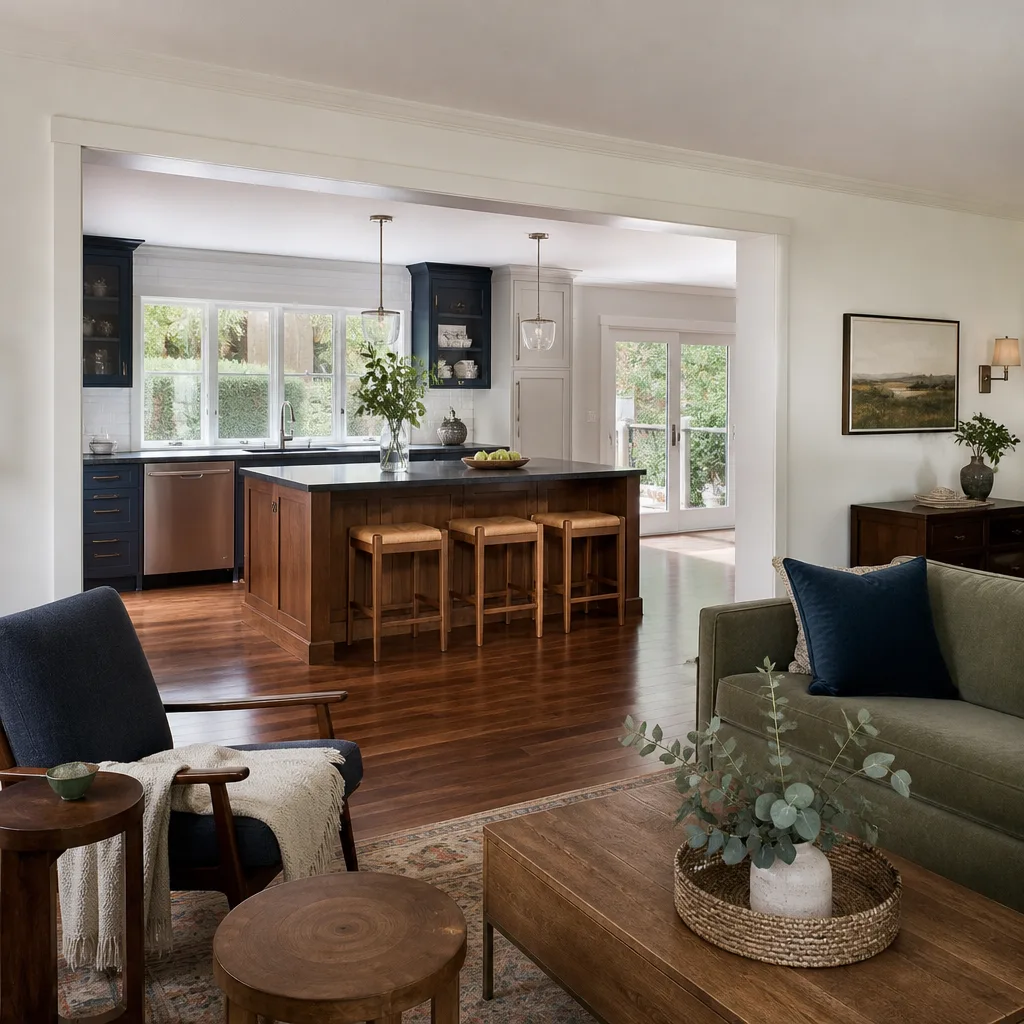
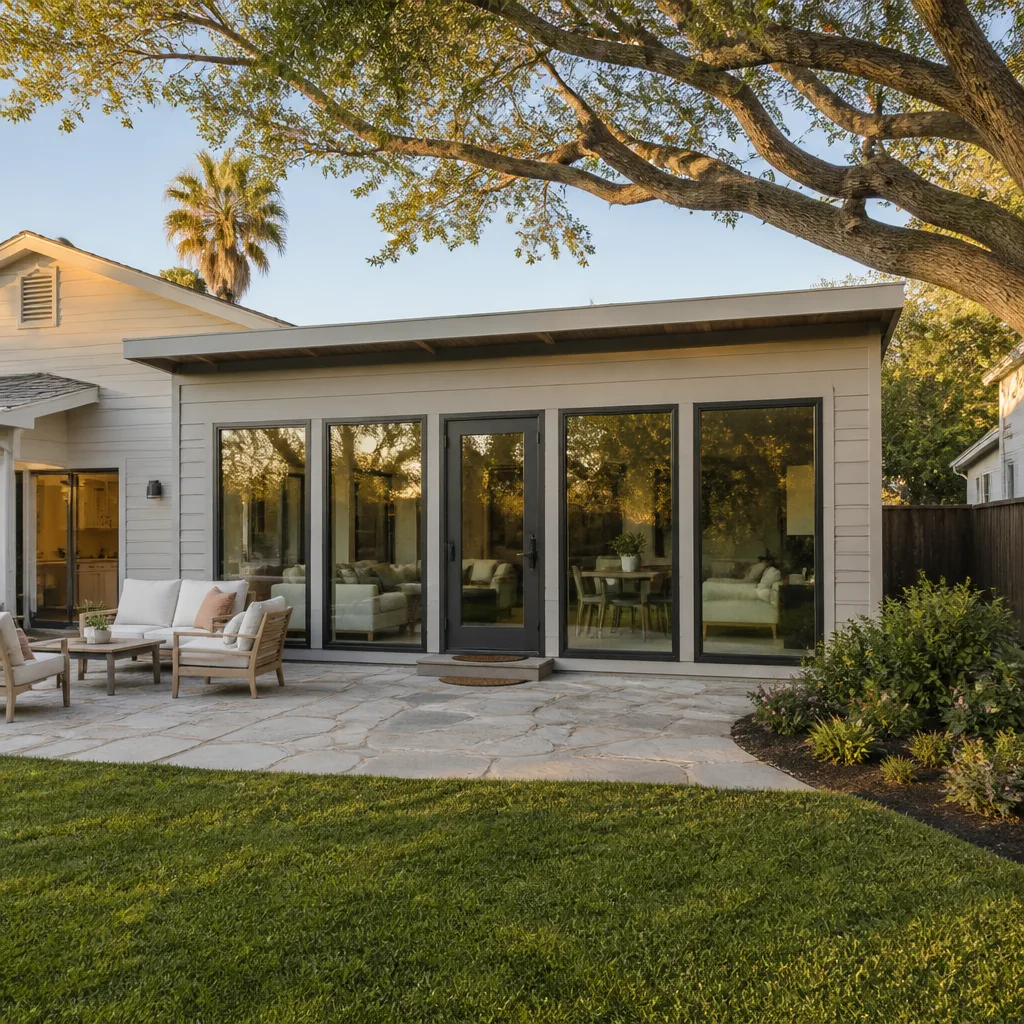
A complete Cover home addition or ADU in Sacramento runs $45,000 – $130,000 installed, and that number moves with square footage, site access, foundation condition, and finish level. A 400-square-foot studio ADU on an existing slab with a simple roof line lands at the lower end when the site is flat and the utility tie-ins are short. A two-bedroom addition with a new foundation, upgraded electrical service, and a tiled bath pushes toward the higher end, and it gets there honestly.
What drives the range in Sacramento specifically: our expanding soils mean most additions need deeper footings or pier work than the original building had, older neighborhoods in Land Park and East Sacramento often have overhead utility lines that require clearance planning, and the city’s ADU review process adds plan-check time that can shift material pricing between quote and permit approval.
Here’s what our written price includes, every time:
- Site evaluation and panel inspection against the original drawings
- Written scope of work with line-item pricing before any tools come out
- All structural hardware, flashing, fasteners, and sealants needed for the repair or build
- Permit coordination and inspection scheduling
- Site clean-up at close, documented scope, and the signed 365-Day Done Right Promise in your hand
If the work doesn’t hold within a year of completion, Bradford comes back and corrects it at no charge. That’s The Garrison Standard, and it’s in writing on every job we close.
DIY or Call Us?
Some things an owner can check safely. Walk the addition’s perimeter after rain and look for standing water against the foundation. Check that the crawlspace vents are open and dry. Look for visible gaps at panel seams you can see from the ground.
What you should not do is get on a ladder and start pulling flashing, cutting into panel seams, or loosening structural fasteners to “see what’s going on.” Cover panels carry roof and wall loads in ways that aren’t obvious from the outside, and releasing the wrong connection can drop a section of wall or roof onto you. High-tension panel connections and load-bearing seams belong to a trained crew with the right equipment.
If something looks wrong, call us at (279) 226-1509. We’ll put eyes on it, tell you what’s actually failing, and hand you a written price before anything gets fixed.
FAQs
A properly installed Cover addition should last 50+ years structurally, but the connections, flashing, and sealants need inspection every 5 years in Sacramento’s climate. Our summers bake sealant until it cracks, and winter rains exploit those cracks fast. The panel cores themselves hold up; it’s the joints that need maintenance.
In most cases, yes. The majority of failures we see are at connections and seams, not the panels themselves. We can re-strap, re-flash, and re-seal a panel connection in one to two days for a fraction of replacement cost. Full panel replacement is only needed when moisture has compromised the panel core or the panel’s structural integrity is gone. Call (279) 226-1509 and we’ll tell you which situation you have.
A single seam or connection repair typically takes one to two days on site. A full panel replacement or structural correction usually runs three to five days including inspection. A complete ADU build from foundation to finish takes three to six months depending on scope and Sacramento’s plan-check timeline.
We keep structural hardware, flashing, sealants, and fasteners on our trucks at all times, so most connection repairs happen same-visit. Actual Cover panels are project-specific and cut to the original CAD file, so those are ordered when needed, which typically adds one to two weeks. We’ll give you the timeline in the written quote, not after you’ve signed.
Ready for a straight answer? Call Bradford Remodeling Co Sacramento at (279) 226-1509. We’ll inspect the Cover addition or ADU, give you a written scope and firm price, and if it’s not done right, the 365-Day Done Right Promise covers the correction. Straight scope, firm price, no surprises after the drywall goes up.
Written by Curtis Lane, Owner, Bradford Remodeling Co Sacramento at Bradford Remodeling Co Sacramento, serving Sacramento and nearby areas.


