
Free written scope consultation - allowances, timeline, and change-order rules on paper before a single trade is scheduled
Plant Prefab Kitchen Remodeling: The Sacramento Owner’s Guide
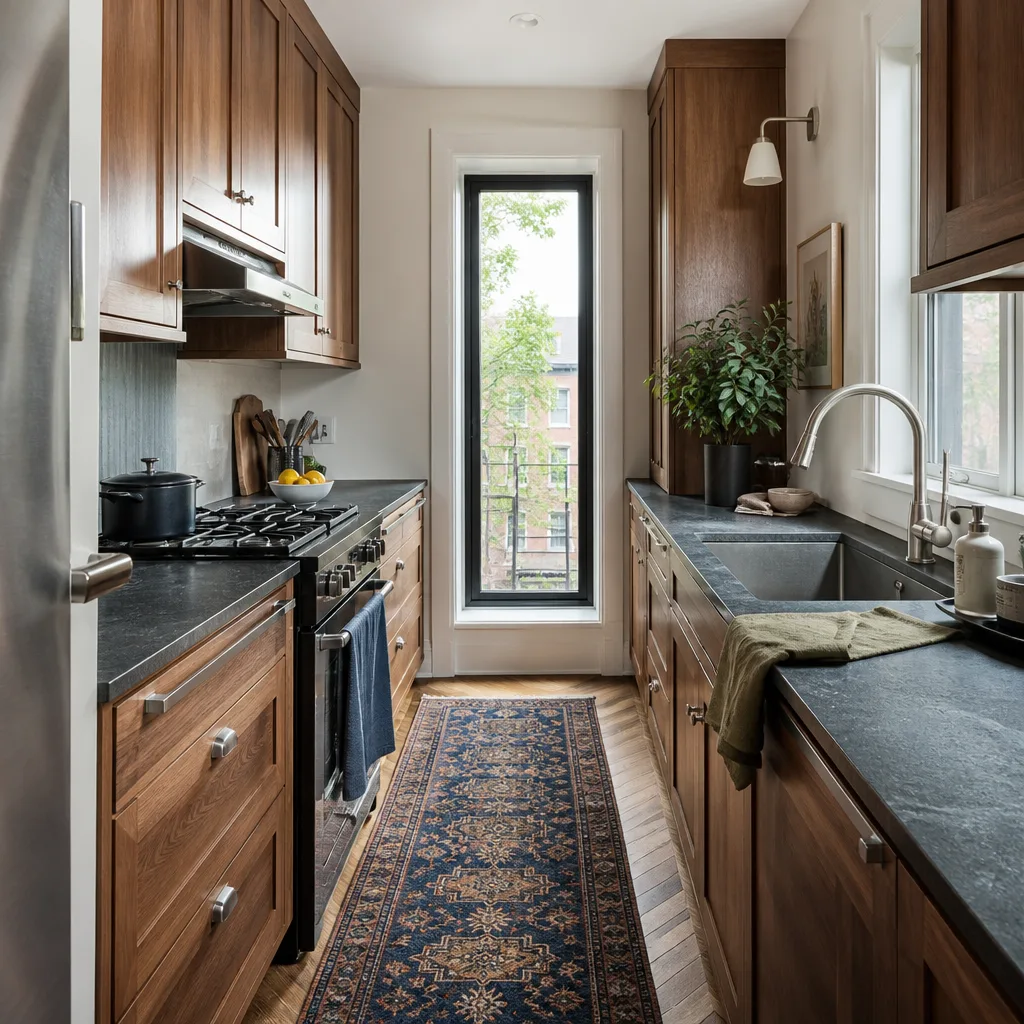
Plant Prefab kitchen remodeling in Sacramento typically runs $14,000 to $45,000 installed, and that range holds whether you’re replacing failed cabinet hardware and laminate surfaces or reworking the entire module. Most owners call us after a cabinet door won’t stay shut, a seam in the countertop has opened up, or the factory-installed laminate has started peeling at the edges. You don’t need a full gut job to fix a Plant Prefab kitchen, but you do need a crew that understands modular construction tolerances before cutting into anything.
We’re an independent Sacramento contractor, not affiliated with Plant Prefab, and we’ve rebuilt enough of these kitchens to know exactly where they fail and what it costs to make them right.
Which Plant Prefab Models This Applies To
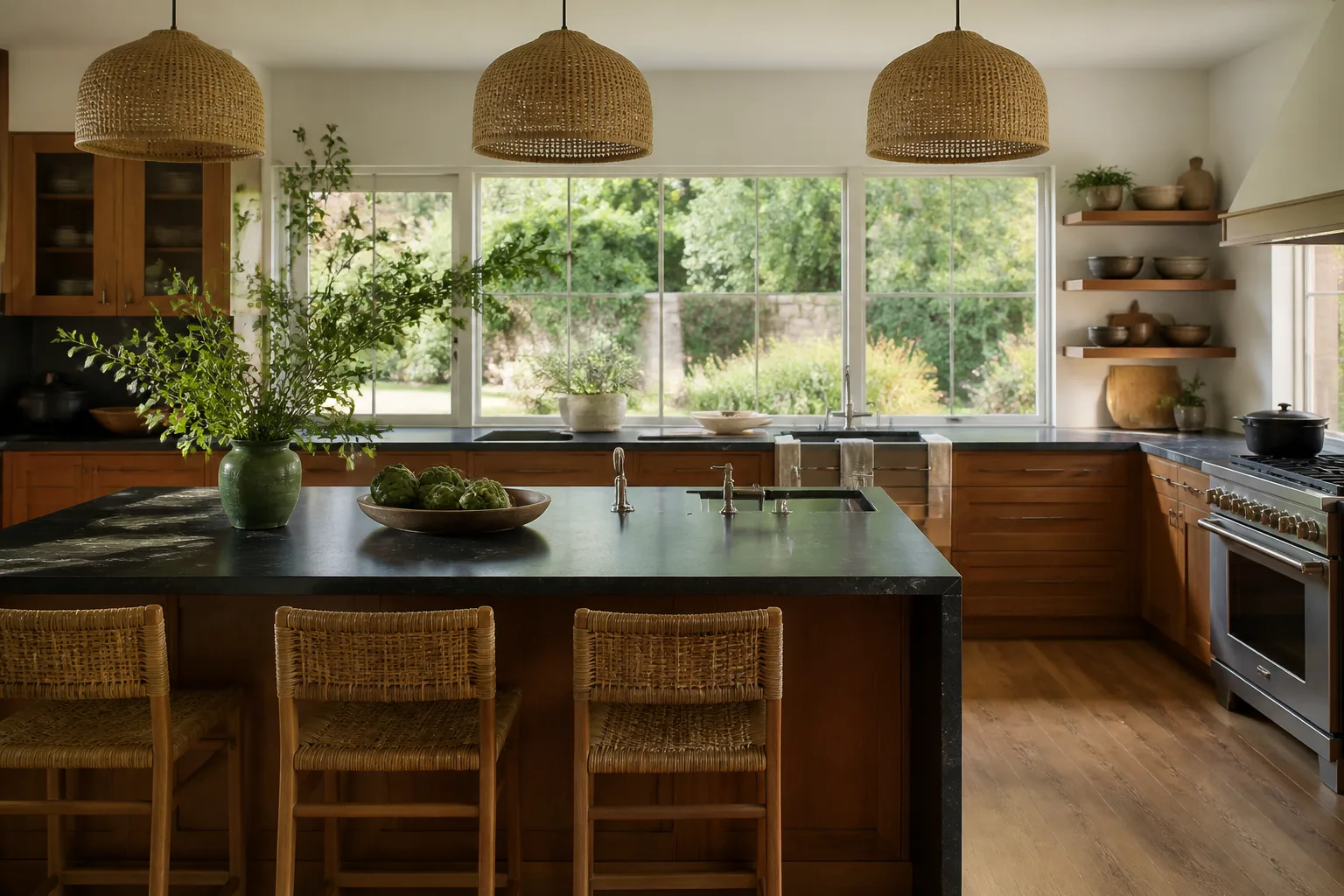
Plant Prefab builds kitchens into their LivingHome and ADU series using modular wall panels that get connected on-site, which means the “kitchen” isn’t a freestanding room you can gut like a traditional stick-built house. Cabinets are typically mounted to steel or wood framing channels inside the wall panel itself, and the backsplash is often bonded directly to a sheathing substrate. If you pull a cabinet without knowing which channel you’re anchored to, you can compromise the panel’s structural skin.
To identify what you have, look for the module tag inside the sink base cabinet or on the back panel of an upper cabinet. It’ll list the series, module number, and date of manufacture. The biggest compatibility gotcha we see in Sacramento is homeowners assuming standard big-box cabinet dimensions will drop into a Plant Prefab layout. They won’t always. Modular panels are built in controlled factory conditions with tighter reveal gaps than site-built framing, so a 36-inch cabinet box from a home center can sit proud of the panel face by a quarter inch. We order to the actual opening measurement, not the nominal size.
On the OEM-versus-aftermarket question: Plant Prefab specifies commercial-grade laminate and plywood-core cabinet boxes on most builds, and the factory finish is matched to a specific color lot. Aftermarket replacements from KraftMaid or Wellborn can match the function and upgrade the materials, but color matching across an entire run requires a physical sample in hand. Where a Plant Prefab kitchen fails early, it’s usually the laminate edge banding or a hinge that was over-torqued at the factory, not the cabinet box itself. We replace the failed component first and only recommend full cabinet replacement when the core is swollen from moisture.
Styles & brands we work with







Signs Your Plant Prefab Kitchen Remodeling Is Failing
- Cabinet doors won’t stay closed or hang crooked. The factory hinges were installed at a torque that didn’t survive Sacramento’s seasonal humidity swings. Once the hinge plate strips out of the particleboard core, the door drifts. Fix is usually a hinge replacement with a longer screw or a threaded insert, not a whole new door.
- Laminate edges are peeling or darkening. This almost always traces back to steam from cooking or a dishwasher vent pointed at the cabinet run. The edge banding loses its glue bond, and once moisture gets behind it, the particleboard swells. If you catch it before the core is soft, it’s a re-band. If not, you’re looking at a new cabinet box.
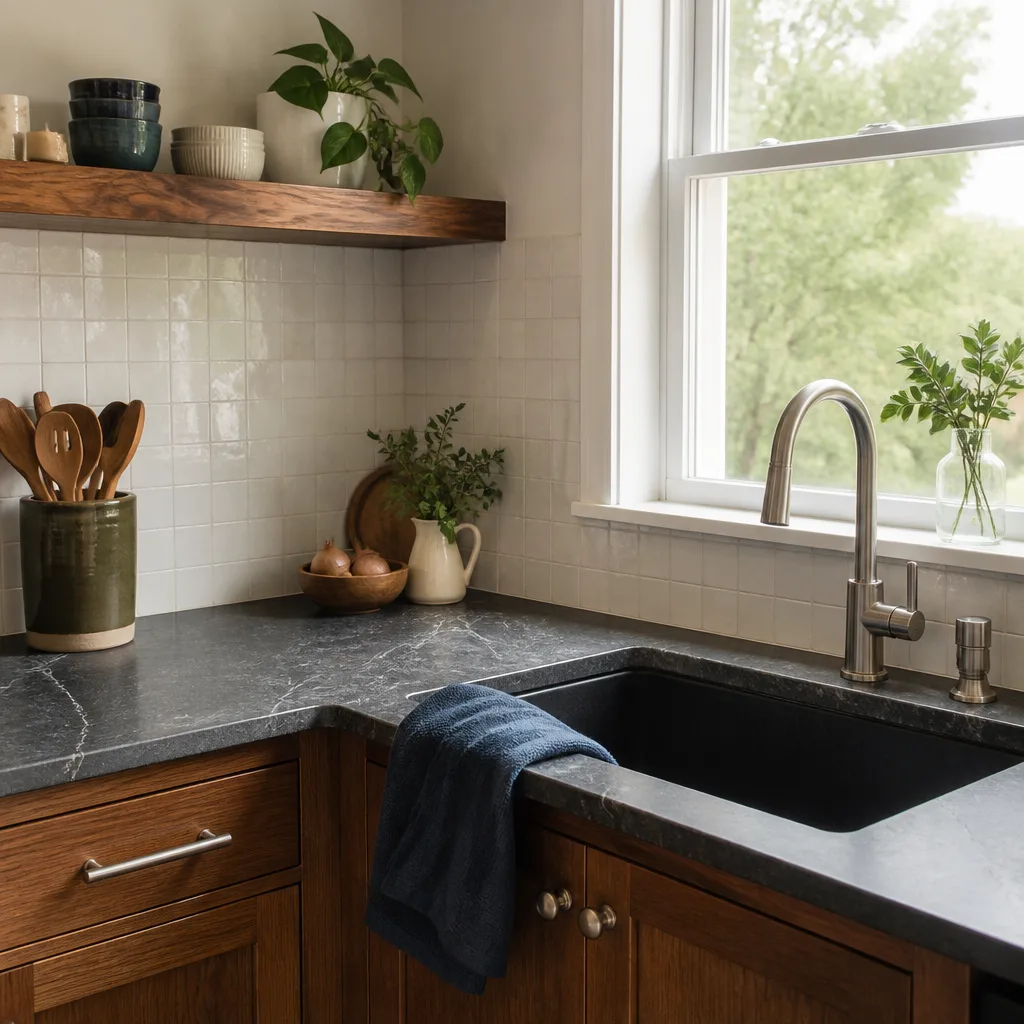
- Countertop seams have opened or the laminate is lifting at the sink. Plant Prefab counters are typically high-pressure laminate over MDF, and the sink cutout is the weakest point. A failed caulk bead lets water wick into the substrate, and the laminate starts to bubble. We replace the run with a solid-surface material like Cambria or Silestone when this happens, because the original MDF core won’t hold a repair once it’s been wet.
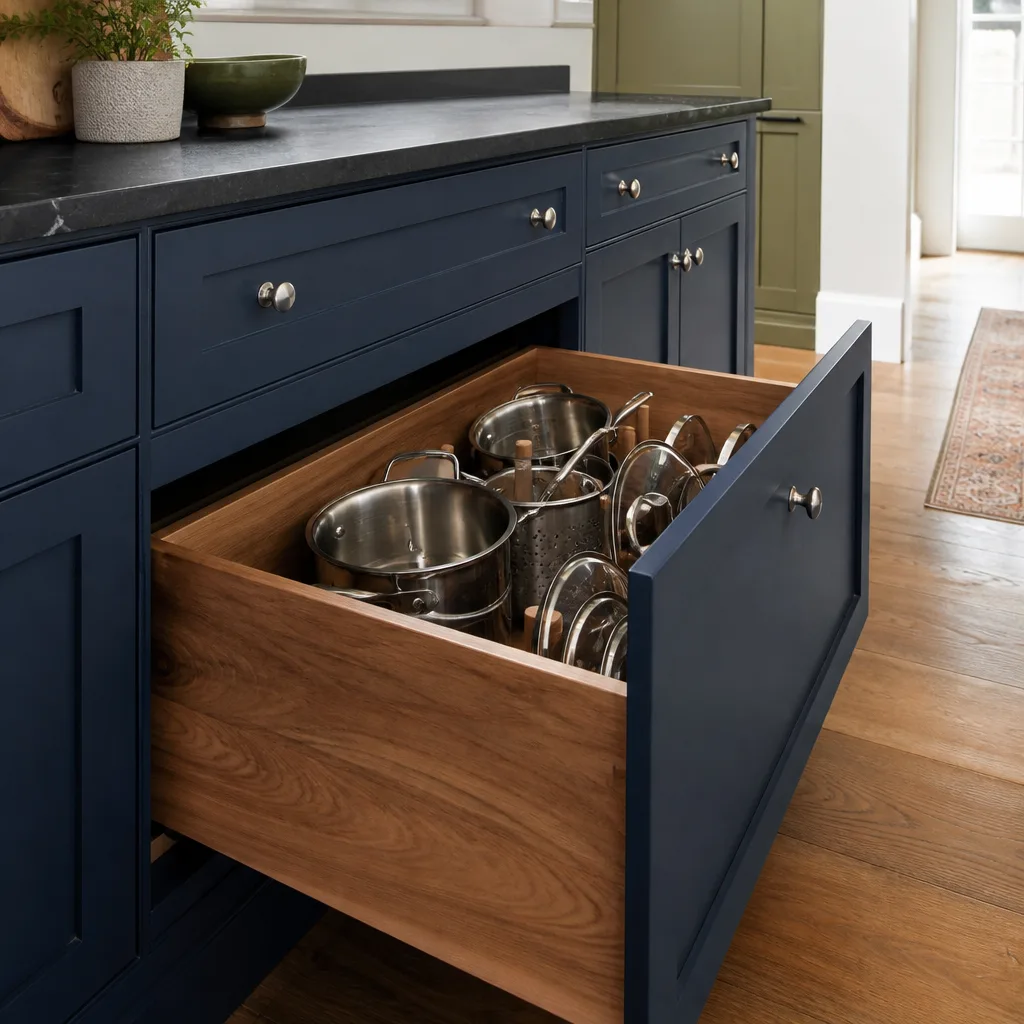
- Soft-close drawers slam shut. The factory soft-close mechanism is internal to the drawer slide, and when it fails, the drawer still works but it feels broken. Replacement slides are cheap; the labor to align a Plant Prefab drawer box is where the cost sits, because the factory tolerances leave little room for adjustment.
- Backsplash tiles have cracked or separated from the wall. Modular homes flex slightly during transport and settling, and Sacramento’s clay soil makes the first two years the likeliest window for a crack. If the tile has separated cleanly from the substrate, that’s a re-bond. If the substrate itself has shifted, the panel needs to be checked before new tile goes up.
See the difference
 Before
 After
After Before
 After
After Before
 After
AfterReplacement Cost & What’s Included
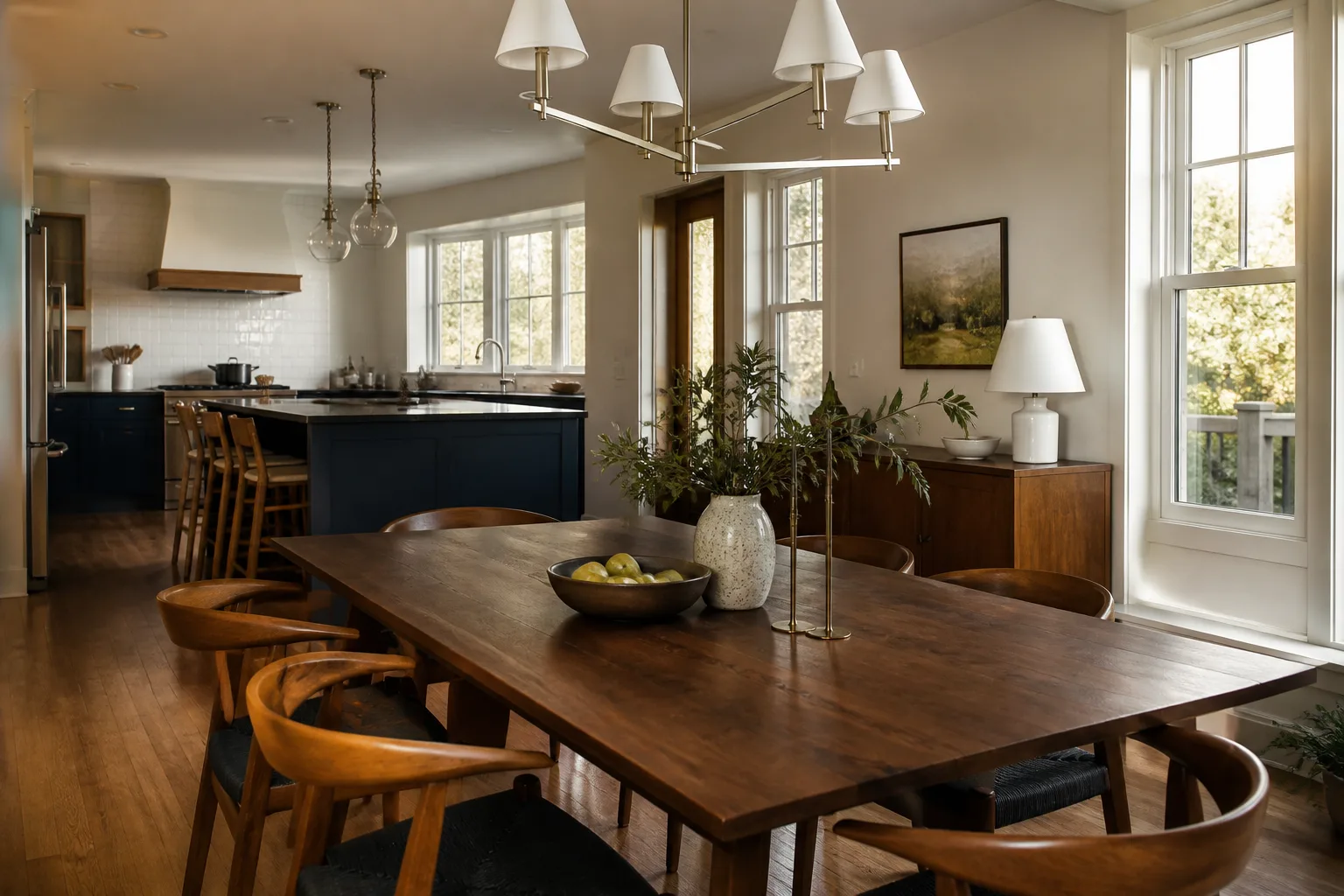
A full Plant Prefab kitchen remodel in Sacramento runs $14,000 to $45,000. A small kitchen refresh with cabinet repair, re-banding, and new hardware lands in the $9,000 to $20,000 range. Cabinet installation alone runs $4,000 to $13,000, countertop installation $2,000 to $6,500, and backsplash work $800 to $2,500. The range depends on the size of the module, the condition of the wall panel behind the kitchen, and whether we’re reusing the original footprint or changing it.
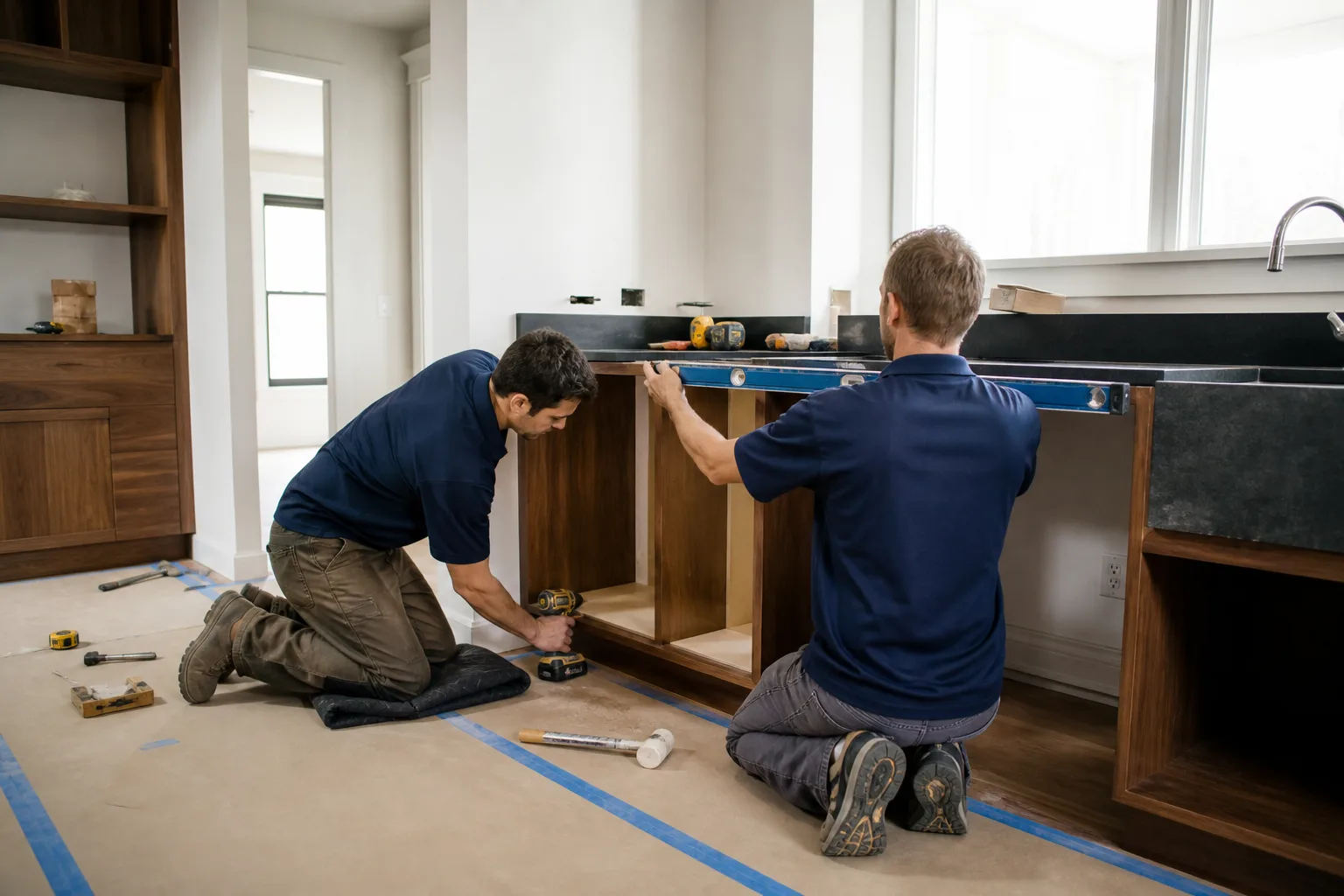
Every quote we give is a written line-item price before any work starts. That price includes parts, labor, disposal of the old material, and a cleanup of the site before we leave. It does not include change orders unless you ask for something different after the rough-in, and if we find something behind the wall that changes the scope, we stop and put the new number in writing before we keep going. No numbers move at the door. Work is covered by the 365-Day Done Right Promise: if anything we installed fails within a year, we come back and correct it at no charge.
DIY or Call Us?
Some of this work is safe to check yourself. You can tighten a loose hinge plate with a longer screw, re-caulk the sink cutout to stop water intrusion, or order a replacement soft-close slide if you can read the brand stamp on the rail. If the drawer still slams after the slide swap, the box is racked and you’re past the homeowner fix. Cabinets that have taken on water, countertops with a lifted substrate, and any panel movement behind the kitchen are not DIY territory. Sacramento’s hard-water humidity and clay-soil settling punish half-fixes. A misaligned Plant Prefab wall panel that gets cut into without understanding the channel framing can turn a $900 cabinet repair into a structural problem. If it involves moisture, panel flex, or a countertop, call us at (279) 226-1509 and we’ll send someone who’s done this before.
FAQs
Expect 15 to 20 years from the factory cabinets and laminate surfaces in Sacramento before significant failure shows, depending on ventilation and humidity control. Edge banding and hardware typically fail inside 5 to 8 years, which is a repair, not a remodel. Call (279) 226-1509 and we’ll tell you honestly which one you’re looking at.
Yes, if the cabinet box is dry and square. Hinges, slides, edge banding, and door faces are all repairable. If the core has swollen from moisture, the cabinet is done. We’ll pull one apart and show you what we found before recommending replacement. Estimates are free.
Plan on 3 to 6 weeks from the day we start pulling cabinets to the day the site is cleaned and the written guarantee is in your hand. Modular kitchens go faster than site-built because the plumbing and electrical rough-in is already in the panel, but countertop fabrication and finish work still need their own time. We’ll give you a schedule with the written price, and we hold to it.
We carry a working inventory of the usual failure points: soft-close slides, hinge plates, edge banding in standard finishes, and the mounting hardware for modular cabinet channels. Anything specific to your module’s color lot or panel layout gets ordered after the site visit. We also work with KraftMaid, Wellborn, Cambria, and Silestone for full replacements.
Written by Curtis Lane, Owner, Bradford Remodeling Co Sacramento at Bradford Remodeling Co Sacramento, serving Sacramento and nearby areas.


