

Last updated October 16, 2026







Free written scope consultation - allowances, timeline, and change-order rules on paper before a single trade is scheduled
DIY vs Professional Construction: The Sacramento Homeowner’s Decision Guide
Every year, Sacramento homeowners file insurance claims that get denied for one reason they never saw coming: the work was done by someone without a California contractor’s license. It’s not the shoddy tile job that sinks them. It’s the fine print in the policy and the California Contractors State License Board’s legal definition of “work of improvement.” Most DIY guides skip this entirely because they’re not written by people who pull permits in Sacramento County for a living. For more guides & resources written by local pros, see our more guides & resources. This guide walks you through the real decision points: the legal line, the insurance exposure, the resale disclosure requirements, and the honest cost math that includes your own time. We’ve done this work in Sacramento since 2004, and we’ll tell you which projects we’d hand to our own neighbors and which ones we’d tell them to call a pro on.
Quick Answer
In Sacramento, the DIY-vs-pro decision isn’t really about whether you can do the work. It’s about three legal and financial lines: the California Contractors State License Board’s $500 threshold for licensed work, the Title 24 energy code requirements on certain replacements, and the insurance policy exclusions that apply when unpermitted work causes a loss. If your project is cosmetic and under the dollar threshold, DIY is legally defensible. If it involves structure, electrical, plumbing, or anything that requires a permit, hiring a licensed contractor protects your insurance coverage, your resale rights, and your liability exposure in ways most homeowners don’t discover until it’s too late. Learn more in our How to Hire a Construction Contractor in Sacramento: A Step-by-Step Guide.
Styles & brands we work with







Table of Contents
- The Legal Line: What California Actually Says About DIY Work
- Projects That Are Genuinely Safe to DIY in Sacramento
- Projects That Create Documented Liability If Done Wrong
- Sacramento’s Title 24 Energy Code and How It Affects DIY
- The Real Cost of DIY: A Sacramento-Specific Model
- What Happens to Your Insurance When DIY Work Fails
- The Five-Year Disclosure Rule Most Homeowners Never Hear About
- Common Mistakes to Avoid
The Legal Line: What California Actually Says About DIY Work
California Business and Professions Code Section 7048 says a homeowner can act as their own contractor on their own primary residence. That’s the good news. The bad news is that most homeowners don’t know where the exemption ends and the licensed-contractor requirement begins. The California Contractors State License Board (CSLB) defines “work of improvement” as any construction, alteration, repair, or improvement to real property where the combined cost of labor and materials is $500 or more. That number surprises people. A $500 threshold means a lot of projects that feel like DIY territory are legally not. Replace a water heater? That’s over $500. Install a new window? Over $500. Relocate an outlet? Over $500. The license requirement exists to protect property owners and the people who buy their homes later.
There are carve-outs. A homeowner can pull an owner-builder permit for work on their own residence, and in Sacramento County, the Building Permits and Inspection Division will process owner-builder permits for many trade categories. That’s the legal path. But pulling an owner-builder permit changes your legal status. You’re now the contractor of record. That means you carry the liability for everything that happens on that job site, and you’re responsible for the work meeting code at final inspection. We’ve met Sacramento homeowners who got through a project fine as owner-builders. We’ve also met ones who ended up in disputes with subcontractors who weren’t paid, with liens filed against the property, and with insurance claims that went nowhere because the policyholder was also the unlicensed contractor.
The takeaway is not that you can’t DIY. The takeaway is that the legal line is lower than most people think, and crossing it without knowing you’ve crossed it has consequences that don’t show up until something goes wrong. As a General Contractor in Sacramento, we see the second-order effects of these decisions every month.
Projects That Are Genuinely Safe to DIY in Sacramento
Let’s be clear-eyed about this. Some projects are safe DIY territory from a legal, insurance, and resale standpoint. They’re cosmetic, they don’t touch structure, they don’t touch electrical or plumbing, and they’re under the $500 threshold or close enough that the exposure is minimal.
- Interior painting. No permit required in Sacramento. No structural implications. If you spill a gallon of paint, your insurance covers the damage under your standard homeowners policy without any unpermitted-work exclusion.
- Trim and baseboard replacement. This is finish carpentry on non-structural elements. The cost typically stays under the threshold unless you’re doing a whole house, and there’s no inspectable code issue.
- Cabinet hardware and fixture swaps. Replacing knobs, pulls, towel bars, and light bulbs. No permit, no code, no problem. Swapping a faucet is generally fine if you’re not moving supply lines.
- Landscape planting and mulching. No structural component. Sacramento’s hot, dry summers and clay-heavy soil mean you’ll want to do your homework on drought-tolerant species, but there’s no legal barrier to doing this yourself.
- Caulking, weatherstripping, and minor exterior sealing. Sacramento’s summer heat can bake caulk in a few seasons. Reapplying sealant around windows and doors is good homeowner maintenance.
- Painting a single room or accent wall. Same as interior painting, but even lower cost and lower risk.
What these have in common is that they don’t require a permit, they don’t affect the building envelope’s energy performance in a code-inspectable way, and they don’t create liability for someone else’s work. If you do a clean job, you haven’t changed anything about the house that a future buyer or inspector would flag. If you do a sloppy job, you can repaint or replace trim without consequence.
Projects That Create Documented Liability If Done Wrong
Now the other side. These are projects where the downside isn’t aesthetic. It’s legal and financial.
- Electrical work of any kind beyond replacing a light fixture at the same location. Sacramento requires permits for most electrical work, and the liability angle is serious. If a DIY electrical project causes a fire, your insurer will investigate. If the work was unpermitted and done by an unlicensed person, the claim gets complicated fast. We’re not saying it’s automatically denied. We’re saying it becomes a fight you don’t want.
- Plumbing beyond swapping a faucet at the same rough-in. Moving drain lines, installing a new water heater, running gas lines. Gas work is the big one. A gas leak from DIY work that causes property damage or injury puts the homeowner in a position no sane person wants to be in. The CSLB requires a license for gas line work, full stop.
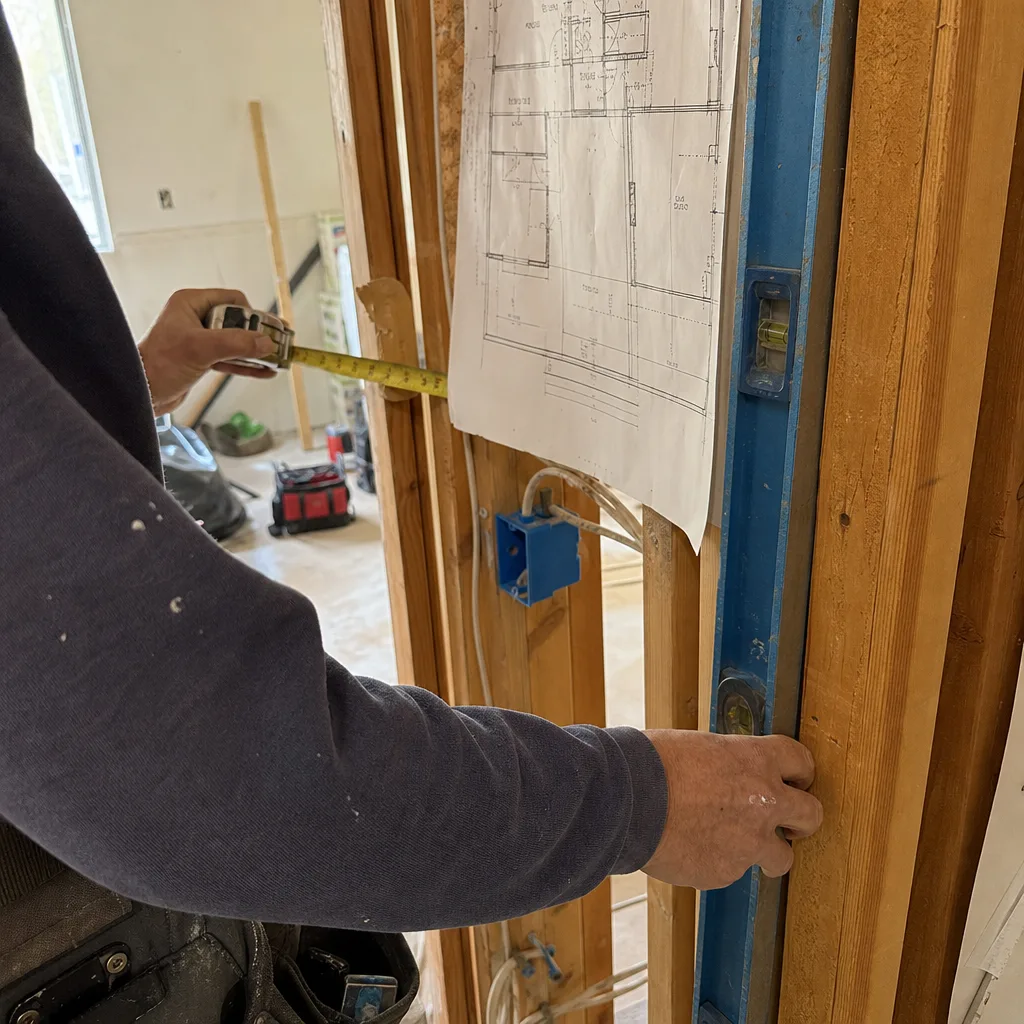
- Structural work: removing walls, changing rooflines, cutting into framing. Sacramento is in Seismic Design Category D. A load-bearing wall removed without proper engineering is not a cosmetic mistake. It’s a house that fails in the next earthquake. Structural work requires permits, inspections, and in many cases, a licensed engineer’s stamp.
- Window and door replacement that changes the rough opening size. This triggers Title 24 energy code requirements, which we’ll get into below. The short version: you will fail inspection if the windows don’t meet current U-factor and SHGC ratings for Sacramento’s climate zone.
- Roofing work beyond replacing a few shingles. Sacramento roofs take a beating: 100-plus-degree summers, occasional hail, and winter rain. A full re-roof requires a permit, and the underlayment and ventilation details are inspectable. A bad roof job means leaks that don’t show up until the first big storm, and by then the decking is already compromised.
- Water heater replacement and HVAC changeouts. Both are Title 24-inspectable work in Sacramento. Both require permits. Both can invalidate manufacturer warranties if installed by someone who isn’t a licensed contractor.
If your project is on that list, the DIY savings evaporate quickly when you factor in the liability. That’s not us selling fear. That’s us telling you what the paper trail looks like after something goes wrong. We work with brands like IKO and Atlas on roofing projects, and those manufacturers won’t honor a warranty on a roof installed by someone without a contractor’s license. Same with most HVAC and water heater manufacturers. The warranty angle alone often covers the difference between DIY and pro installation.
Sacramento’s Title 24 Energy Code and How It Affects DIY
California’s Title 24, Part 6 energy code is stricter than anything at the federal level, and Sacramento enforces it. If you’re doing anything that touches the building’s energy performance, you’re in inspectable territory. That includes window replacement, water heater swaps, HVAC changeouts, insulation work, and certain types of lighting retrofits. Here’s what the code requires in Sacramento’s climate zone, and why it matters for the DIY decision.
Window replacements. Sacramento is in Climate Zone 12. Current Title 24 requirements for replacement windows in this zone mandate a maximum U-factor of 0.30 and a maximum SHGC (solar heat gain coefficient) of 0.23. If you buy windows at a big-box store without checking those numbers, the windows may not be legal to install in Sacramento. The permit will be denied or the inspection will fail. You’ll have already paid for materials you can’t use. A contractor doing Home Remodeling in Sacramento pulls the specs before the window order goes in.
Water heaters. Title 24 requires all new water heater installations in California to meet current efficiency standards, and the installation itself must comply with strapping and anchoring requirements for seismic safety. The permit is mandatory. The strapping requirements are specific: two straps on the upper third and lower third, anchored to wall studs with lag bolts. DIY installers miss the strap placement all the time, and the inspector catches it. Now you’ve got a failed inspection and a permit that’s still open.
HVAC changeouts. Replacing a furnace or AC unit in Sacramento requires a permit, a HERS (Home Energy Rating System) rater to verify the installation, and documentation that the replacement equipment meets Title 24 efficiency minimums. A homeowner cannot self-certify a HERS verification. That alone makes DIY installation legally impossible for most HVAC work. You’d have to hire a HERS rater, which means you’re already in contractor territory without the contractor’s license or insurance.
The pattern here is the same as the liability section: the projects that feel like “just swapping a unit” in most states are code-inspectable work in Sacramento. The DIY option doesn’t exist in a legally clean way for many of these, and the ones where it does exist require knowledge of code details that most homeowners don’t have and shouldn’t be expected to develop for a single project.
The Real Cost of DIY: A Sacramento-Specific Model
The most common DIY cost model is wrong. Homeowners compare material costs to a contractor’s labor quote and feel good about the savings. But the real DIY cost includes four categories most people forget:
- Permit fees. Sacramento County and the City of Sacramento both charge for permits. A water heater permit is around $100 to $150. A window replacement permit varies based on the number of windows and the project scope. An owner-builder pulls these permits themselves, but the fees come out of the same pocket.
- Tool rental or purchase. A window replacement project might require a reciprocating saw, a level, shims, flashing tape, and a brake for bending trim coil. A roofing project needs a nail gun, a compressor, ladder jacks, and safety equipment. Tool rental in Sacramento runs $40 to $100 per day per major tool. Buying is worse if you’ll never use it again.
- Material waste from the learning curve. Every trade has a waste factor. Pros build waste into their bids. DIYers pay for it out of pocket. Cut a window opening wrong, and you’re buying a new piece of trim worth $50. Mis-cut a roofing shingle bundle, and that’s $40 gone. Do it wrong twice on a small project, and the waste starts to eat the savings.
- Your hourly rate. This is the one nobody counts. If you earn $45 an hour at your job and spend 60 hours on a kitchen remodel that a pro could do in 40, you didn’t save money. You spent $2,700 of your own time to save a portion of a labor bill. Sometimes that trade is worth it because you enjoy the work. But call it what it is: you’re paying yourself in satisfaction, not in savings.
Here’s a real comparison for a typical Sacramento kitchen cabinet refinish, a project that sits near the DIY-able line:
- DIY material cost: sandpaper, primer, paint, new hardware. $300 to $600.
- DIY time: 30 to 50 hours of labor spread across multiple weekends.
- Contractor bid for cabinet refinish: $2,500 to $4,500, depending on the kitchen size and cabinet condition.
- True DIY cost: $600 material plus 40 hours at $45 an hour, which is $1,800. So $2,400 total, close to the low end of a professional bid, with no workmanship warranty and no one to call if the finish fails in six months.
For kitchens where the cabinets are shot and you’re doing a full Kitchen Remodeling in Sacramento, the math skews even further toward hiring a pro because the project includes electrical, plumbing, and countertop fabrication that no one should DIY.
What Happens to Your Insurance When DIY Work Fails
California homeowners insurance policies are written with specific language about unpermitted work and unlicensed contractors. The standard ISO HO-3 policy, which most Sacramento homeowners carry, excludes coverage for loss caused by “faulty, inadequate, or defective” workmanship, unless the work was performed by a licensed contractor. Read that sentence again. The exclusion doesn’t just apply to the work itself. It applies to the loss caused by the work. If a DIY water heater installation leaks and destroys your kitchen floor, the insurer can deny the entire claim, not just the water heater portion. If a DIY electrical project starts a fire, the insurer will investigate who did the work and whether permits were pulled.
The claims process in California typically works like this: you file a claim, the adjuster investigates cause and origin, and if the investigation points to unpermitted or unlicensed work, the carrier requests the permit history from Sacramento’s Building Permits and Inspection Division. No permit, no licensed contractor of record, and the claim is denied on the workmanship exclusion. The homeowner is left with the repair cost, the original project cost, and a denied claim on their record that follows them to the next insurer.
We’re not attorneys and this is not legal advice, but the insurance angle is one of the clearest reasons to hire a licensed contractor for anything that could cause water, fire, or structural damage. The contractor’s license and insurance create a paper trail that protects the homeowner in exactly this scenario. That’s part of what you’re buying when you hire Bradford Remodeling Co Sacramento home services: a documented, licensed, insured paper trail that keeps your own policy intact.
The Five-Year Disclosure Rule Most Homeowners Never Hear About
Here’s the fact most DIY guides skip, and it’s the one that matters most at resale. California Health and Safety Code Section 19825 allows an owner-builder to construct or alter their own home without a contractor’s license. But there’s a catch baked into the same section. If you pull an owner-builder permit and complete work on your home, you cannot sell that home for five years after completion without disclosing, in writing, that the work was owner-built. The buyer must acknowledge the disclosure in writing. If you don’t disclose, you’re exposed to a lawsuit for failure to disclose material facts about the property.
What does that mean in practical terms? You pull an owner-builder permit for a kitchen remodel in 2025. In 2027, you get a job transfer and need to sell. The buyer’s agent runs the permit history, sees the owner-builder permit, and now the buyer wants a discount because the work wasn’t done by a licensed contractor. Or the buyer walks entirely. Or the deal goes through, and three years after closing the new owner finds a problem with the work, and because you failed to make the required disclosure, you’re defending yourself in a lawsuit while living in another city.
Licensed contractor work doesn’t carry this cloud. The permit history shows a licensed contractor of record, the work is covered by the contractor’s warranties, and the disclosure issue goes away. If you plan to stay in your Sacramento home for the next decade, the five-year disclosure rule may not bother you. But most homeowners don’t know when they’ll need to sell. Life happens: jobs change, family circumstances shift, and a house you thought was a forever home becomes a property you need to liquidate. The disclosure rule sits in the background either way.
Common Mistakes to Avoid
- Comparing material costs to contractor bids without accounting for permits, tools, waste, and time. The real cost gap is much smaller than the sticker price suggests. Run the full model before you decide.
- Pulling an owner-builder permit without understanding the liability you’re assuming. The owner-builder is the contractor of record. If a worker gets hurt on the job, that’s on you. If the work fails, that’s on you. If a subcontractor files a lien, that’s on you.
- Buying windows, water heaters, or HVAC equipment without checking Title 24 compliance for Sacramento’s Climate Zone 12. Big-box stores sell products that aren’t legal to install here. Check the U-factor, SHGC, and efficiency ratings before you spend a dollar.
- Assuming your homeowners insurance covers DIY mistakes. It usually doesn’t, and the exclusion applies to the resulting damage, not just the work itself. This is the most expensive misconception in home improvement.
- Ignoring the five-year owner-builder disclosure rule. If you might sell within five years, owner-builder work complicates the sale in ways that licensed contractor work does not.
- Underestimating Sacramento’s drainage and soil movement issues. The clay-heavy soil in much of Sacramento County expands and contracts with moisture, which stresses foundations and slabs. DIY work that ignores drainage or soil movement can cause problems that don’t show up for years.
- Not getting a written scope before starting any professional project. If you do hire a contractor, get the price and scope in writing before work starts. We put every price in writing before a single tool comes out because that’s the only way a homeowner can hold a contractor accountable.
See the difference
 Before
 After
After Before
 After
After Before
 After
AfterWhen to Call a Professional
Call a professional when the project touches structure, electrical, plumbing, gas, roofing, or any Title 24-inspectable system. Call a professional when the work requires a permit you’re not prepared to pull and manage as the contractor of record. Call a professional when the warranty on the materials matters to you, because most manufacturers won’t honor warranties on DIY or unlicensed installation. Call a professional when you don’t have the time, tools, or appetite to learn a trade you’ll use once. Bradford Remodeling Co Sacramento offers free estimates in Sacramento – call (279) 226-1509 to get a written price before any work starts, with no numbers that move at the door.
Frequently Asked Questions
In California, any “work of improvement” where the combined labor and materials cost is $500 or more requires a licensed contractor under CSLB rules. This includes most electrical, plumbing, structural, roofing, and HVAC work. The homeowner exemption allows owner-builder permits for work on your own primary residence, but that shifts the liability and the code-compliance responsibility to you as the homeowner. If the project involves gas lines, structural changes, or Title 24-inspectable systems, hiring a licensed contractor is the legally clean path. Call (279) 226-1509 to discuss your project and get a free estimate.
California allows homeowner electrical work under an owner-builder permit for your own primary residence, but it must be permitted, inspected, and up to current code. Sacramento’s inspectors check for proper wiring methods, circuit protection, and grounding. The risk isn’t just a failed inspection. If DIY electrical work causes a fire, your insurer may deny the claim under the workmanship exclusion when the work was done by an unlicensed person. Our recommendation: hire a licensed contractor for anything beyond changing a light fixture or a wall outlet. Call (279) 226-1509 for an exact quote.
Sacramento permit fees vary by project type and scope. A water heater permit runs roughly $100 to $150. Window replacement permits scale with the number of windows and typically start around $200. Full kitchen remodel permits can run $1,000 or more depending on the scope of electrical, plumbing, and structural work. The permit fee is part of the project cost whether you DIY or hire a pro. What changes is who manages the permit, who passes inspection, and who carries the liability if something doesn’t meet code. Call (279) 226-1509 to get a written estimate that includes permit costs.
California homeowners policies exclude coverage for loss caused by faulty or defective workmanship when the work was not performed by a licensed contractor. The exclusion applies to the damage caused by the failed work, not just the work itself. If a DIY water heater leaks and destroys flooring, the flooring damage may not be covered. If a DIY electrical installation causes a fire, the fire damage may not be covered. This is why we recommend licensed contractors for any project with water, fire, or structural risk. Call (279) 226-1509 to discuss your project’s insurance implications.
California law allows owner-builders to work on their own homes, but if you sell the home within five years of completing owner-built work, you must disclose the owner-builder status in writing, and the buyer must acknowledge it in writing. This disclosure can reduce the sale price, scare off buyers, and create legal exposure if the disclosure is missed. Licensed contractor work doesn’t carry this cloud because the permit history shows a licensed contractor of record. If you might sell within five years, the owner-builder route has hidden costs. Call (279) 226-1509 for a free consultation on your project.
A full kitchen remodel in Sacramento typically takes 6 to 10 weeks from demolition to final inspection, depending on scope, material lead times, and permit scheduling. Cabinet orders from manufacturers like KraftMaid and Wellborn run 4 to 6 weeks in most cases, and countertop fabrication from Cambria or Caesarstone adds another 2 to 3 weeks. The Sacramento Building Permits and Inspection Division schedules inspections based on their workload, which can add days to the timeline. The fastest way to get an accurate schedule is to work with a contractor who pulls permits early and orders materials before demo starts. Call (279) 226-1509 to get a written timeline for your project.
The Bottom Line

Sacramento homeowners face a DIY decision that’s more complicated than most national guides admit. The $500 CSLB threshold means projects that feel like DIY territory legally aren’t. Title 24 makes window, water heater, and HVAC replacements code-inspectable work with specific equipment requirements for Climate Zone 12. Insurance policies exclude damage caused by unlicensed workmanship. The five-year owner-builder disclosure rule complicates resale. And the true DIY cost includes permits, tools, waste, and your own time. For cosmetic work under the threshold, DIY makes sense. For anything that touches structure, electrical, plumbing, gas, or energy performance, the licensed contractor route protects your insurance, your resale rights, and your liability. See our Seasonal Construction Care for Sacramento: Year-Round Homeowner’s Guide for maintenance tips that keep these systems in good shape. At Bradford Remodeling Co Sacramento, we put every price in writing before work starts, we stand behind our work with the 365-Day Done Right Promise, and a live person answers our phone 24/7 at (279) 226-1509. Call us for a free estimate on your next project.
Written by Curtis Lane, Owner at Bradford Remodeling Co Sacramento, serving Sacramento since 2004.


