
Free written scope consultation - allowances, timeline, and change-order rules on paper before a single trade is scheduled
Dvele Home Additions & ADU: The Sacramento Owner’s Guide
Dvele home additions and ADU construction in Sacramento typically runs $45,000 to $130,000 for a standard addition, and $90,000 to $220,000 for a full standalone ADU, depending on square footage, foundation work, and utility rough-in. We stock the structural and finish materials needed to match Dvele’s panelized framing and high-performance envelope, and we can usually begin your site assessment within a few days of your call to (279) 226-1509.
Most Dvele owners in Sacramento contact us not because the home itself failed, but because they want to extend the system. A growing family, a home office, or an aging parent means the original footprint no longer fits. Sometimes it’s a prior addition that wasn’t built to Dvele’s spec – leaky transitions, misaligned rooflines, or HVAC that never balanced – and now the fix requires tearing back to structure and doing it right.
Which Dvele Models This Applies To
Dvele builds with factory-cut, panelized wall and roof assemblies, which means any addition has to key into existing panel joints, not just butt against stucco or siding. We work with Dvele’s standard wall panel heights, structural insulated panel (SIP) roof profiles, and the mechanical chases that run through floor cassettes. The compatibility issue isn’t model names – Dvele doesn’t use traditional model lines like a car manufacturer – it’s which generation of panelized system your home came with and whether the original shop drawings are available.
Before we cut a single opening, we pull the panel map for your home. If you have the original Dvele documentation, great. If not, we locate the stamp on the panel edges inside the attic or crawl space and reverse-engineer the load path. For OEM materials, Dvele’s high-performance envelope – triple-glazed windows, continuous exterior insulation, and airtight tape systems – matters more than branding. We spec aftermarket structural components only when they match the R-value and air-sealing performance of the original system. Skipping that step is how you get a Sacramento summer where the addition runs 8 degrees hotter than the rest of the house.
Two specifics that catch owners off guard: first, Dvele’s wall panels are typically thicker than standard 2×6 framing, so door and window bucks in the addition have to be custom-depth, not big-box stock. Second, Sacramento’s Title 24 energy code now requires solar-ready conduit and higher wall insulation values for additions over 500 square feet – Dvele homes usually exceed that baseline, but a cheap addition won’t, and that mismatch shows up on the permit inspection.
Styles & brands we work with







Signs Your Dvele Home Additions & ADU Is Failing
- Cracking at the transition seam. Where the addition meets the original Dvele panel, differential settling or poor flashing creates a vertical crack that reappears after caulk. The fix is a structural tie-in, not more sealant.
- Uneven floor temperature. If the addition floor is cold in winter or the room never holds temperature, the continuous insulation wasn’t carried through the foundation or the floor cassette. You’re paying utility bills for heat that’s escaping through a thermal break.
- Condensation or mildew at the roofline joint. Dvele roofs are designed as a single airtight assembly. A field-built roof section that isn’t taped and sealed to the same standard will collect moisture at the seam, and Sacramento’s winter rain will find it.
- Doors that stick seasonally. If doors between the addition and original home bind in summer and loosen in winter, the addition’s foundation wasn’t isolated or pinned correctly, and it’s moving independently.
- HVAC imbalance. The original Dvele mechanical system was sized for the original footprint. A new room on the same air handler that never gets comfortable means the duct runs are undersized or the return path is choked.
See the difference
 Before
 After
After Before
 After
After Before
 After
AfterReplacement Cost & What’s Included
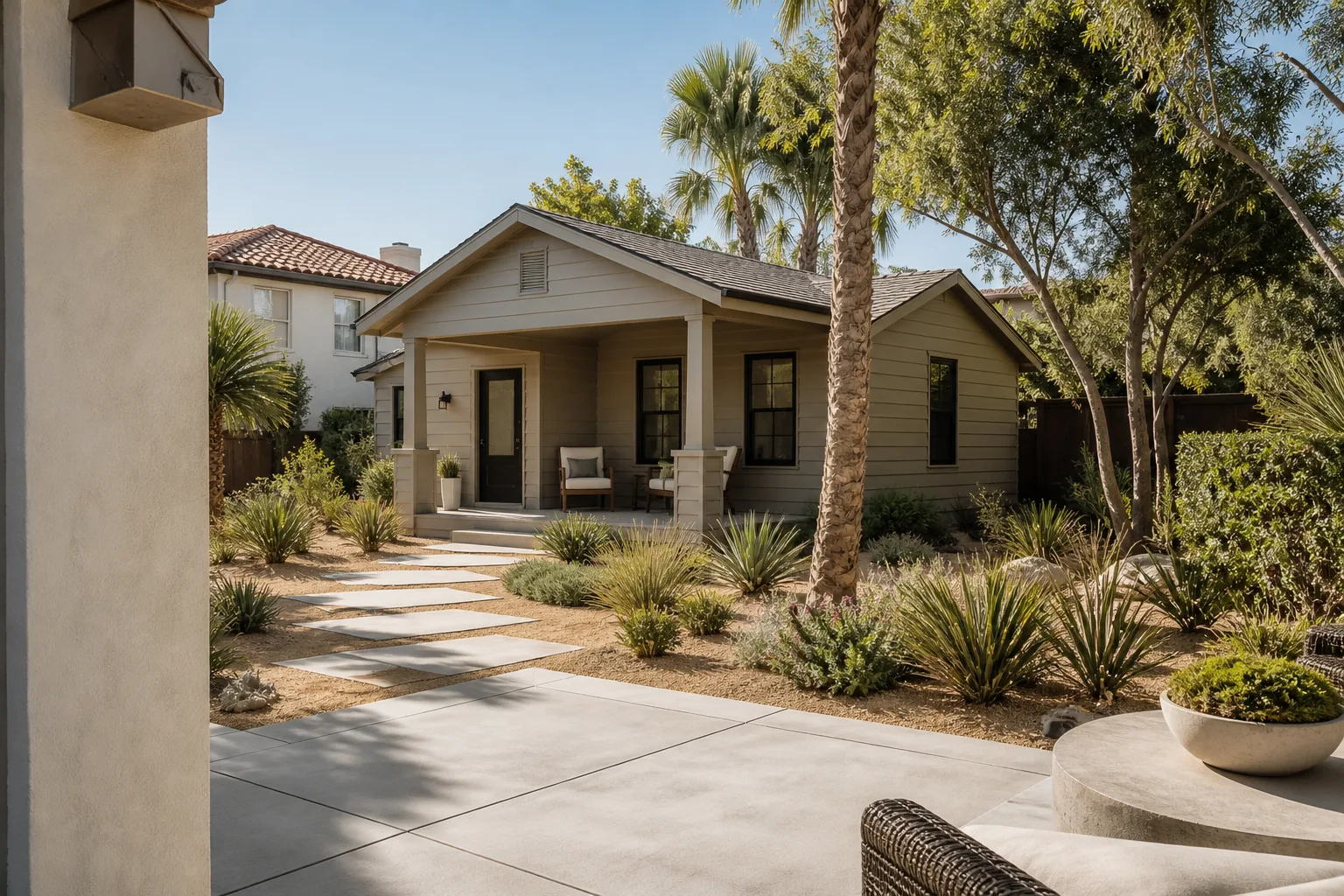
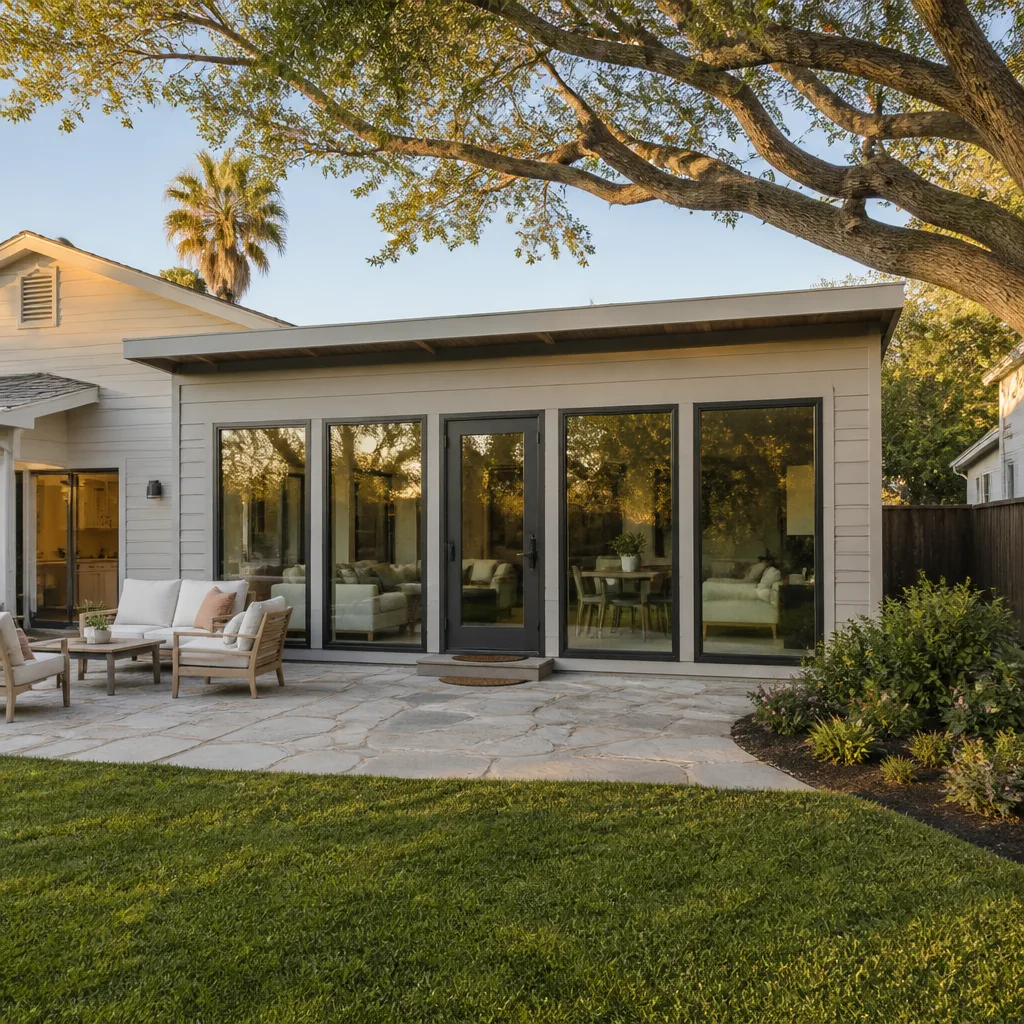
In Sacramento, a Dvele-compatible home addition runs $45,000 to $130,000 installed. The spread comes down to square footage, whether you’re adding a single room or a multi-room suite, foundation type (slab, crawl space, or pier), bath or kitchen rough-in, and how much of the original envelope we have to open to make the connection. A full detached ADU runs $90,000 to $220,000, with the higher end reflecting utility trenching, upgraded electrical service, and site work on Sacramento’s clay-heavy soil.
Every number we give is a written, line-item price before work starts. That includes panel matching, structural tie-in, insulation continuity, drywall, texture, paint, trim, flooring in the new space, and all permits pulled by us. No change orders unless you change the scope. And the whole project carries the 365-Day Done Right Promise – if anything fails in the first year, we come back and fix it at no charge. That’s The Garrison Standard, and it’s in writing.
DIY or Call Us?
What you can safely check yourself: walk the transition seam and look for cracking, check for moisture staining at the roofline, and note whether the addition holds temperature. That tells you whether you have a real problem and gives us a head start on diagnosis.
What you should not do: cut into a Dvele panel, move a load-bearing wall, or attempt to re-tape the air barrier yourself. The panels are structural, the envelope is airtight for a reason, and a wrong cut into a factory-built wall cassette can compromise the entire assembly. We’re happy to walk you through the assessment on the phone, but the actual tie-in work belongs to a crew that’s done it before. Call (279) 226-1509 and we’ll put eyes on it.
FAQs
A properly tied-in addition to a Dvele home should last as long as the original structure – decades – because the connection, weather barrier, and foundation are built to the same standard. The failure points that shorten that lifespan in Sacramento are shortcuts at the transition seam and undersized HVAC, both of which we address before the drywall goes up. Call (279) 226-1509 to get an assessment on your existing or planned addition.
Yes, in most cases the tie-in, flashing, insulation, and finishing can be repaired without tearing down the addition, provided the foundation is sound and the framing isn’t rotted. The repair cost depends on how much of the seam and roof joint we have to open, but a straight repair runs a fraction of a full rebuild. Call (279) 226-1509 and we’ll give you a written line-item price before any work begins.
A single-room addition typically runs 8 to 12 weeks from permit approval to final paint in Sacramento; a full ADU is usually 4 to 6 months, with utility work and inspections shaping the timeline. We give you a written schedule with the written price, and if we see a delay coming, we tell you before it becomes a surprise. Straight scope, firm price, no surprises after the drywall goes up.
We carry the structural ties, panel-depth bucks, air-sealing tapes, and insulation products sized for Dvele wall and roof panels, and we source panel-matching materials from documented manufacturers with specs that match Dvele’s envelope performance. You don’t need to order anything – we handle procurement and delivery, and every material is itemized on your written price. For a free estimate, call (279) 226-1509.
Bradford Remodeling Co Sacramento is an independent contractor and is not affiliated with or endorsed by Dvele. We also build with KraftMaid, Cambria, and Silestone where the project calls for them.
If your Dvele home in Sacramento needs an addition, an ADU, or a repair to a prior addition that wasn’t done right, call (279) 226-1509. A live person answers, and your estimate is free and in writing before a single tool comes out.
Written by Curtis Lane, Owner, Bradford Remodeling Co Sacramento at Bradford Remodeling Co Sacramento, serving Sacramento and nearby areas.


