

Last updated October 16, 2026







Free written scope consultation - allowances, timeline, and change-order rules on paper before a single trade is scheduled
Construction Permits, Codes & Inspections in CA: What You Need to Know
Sacramento title companies are increasingly flagging unpermitted additions during escrow. A $30,000 room addition built without a permit can legally require full demolition, not just a retroactive inspection, depending on the structural systems involved. This guide and our more guides & resources explain the California and Sacramento permit system as a financial instrument, not a bureaucratic hurdle. You’ll learn which projects trigger permits, what inspectors actually check, how Title 24 energy rules affect your remodel in Sacramento, and how to handle an unpermitted improvement you inherited.
Quick Answer
Most construction work in Sacramento that alters structure, plumbing, electrical, or mechanical systems requires a permit from the City of Sacramento Community Development Department. Minor cosmetic repairs like painting, flooring, and cabinet replacement are typically exempt. Skipping permits creates a title defect that can block a sale, void an insurance claim, and leave you personally liable for work that fails inspection.
Styles & brands we work with







Table of Contents
- Which Projects Trigger a Permit in Sacramento
- What Falls Under the Minor Repair Exemption
- How the Sacramento Permit Portal Works
- What Rough Framing, MEP Rough-In, and Final Inspections Actually Cover
- Title 24 Energy Compliance in Sacramento’s Climate Zone 12
- Handling Unpermitted Work You Inherited
- What Permits Cost in Sacramento
- Common Mistakes to Avoid
Which Projects Trigger a Permit in Sacramento
The City of Sacramento follows the California Building Standards Code, which includes the California Residential Code. A permit is required when you alter the structure of a dwelling, move or add walls, change the footprint, or modify plumbing, electrical, or mechanical systems. This applies to additions-see our Construction Warning Signs: A Sacramento Homeowner’s Reference Guide-kitchen remodels that relocate plumbing or electrical, bathroom remodels that move drains, window replacements that change rough opening sizes, and HVAC replacements.
Here’s what triggers a permit in Sacramento, with real thresholds:
- Room additions of any size that extend the conditioned footprint.
- Structural changes including removing or cutting into load-bearing walls, altering roof framing, or adding beams.
- Window and door replacements where the rough opening changes size. Same-size replacements still require compliance with Title 24 but may qualify for a simpler permit path.
- Water heater replacements and any gas line work.
- Electrical panel upgrades, new circuits, or any wiring beyond simple fixture swaps.
- HVAC system replacements including furnaces, condensers, and ductwork modifications.
- Roof replacements that involve more than one layer of new roofing material.
- Decks over 30 inches above grade or attached to the dwelling.
- Retaining walls over 4 feet in height measured from the bottom of the footing to the top of the wall.
We’ve seen Sacramento homeowners assume a kitchen remodel doesn’t need a permit if they’re keeping the same footprint. That’s wrong. In our experience with Kitchen Remodeling in Sacramento, relocating a sink or adding a gas line for a range triggers permit requirements even when no walls move. The permit isn’t about the visible finish work. It’s about what’s inside the walls: drain lines, supply lines, gas, and wiring.
What Falls Under the Minor Repair Exemption
The California Residential Code exempts “minor repairs” from permit requirements. The definition is narrower than most homeowners think. The exemption covers work that does not alter the structure, does not change the plumbing or electrical system’s design, and does not add square footage or fixtures.
Here’s what you can typically do without a permit in Sacramento:
- Painting and wallpapering interior or exterior surfaces.
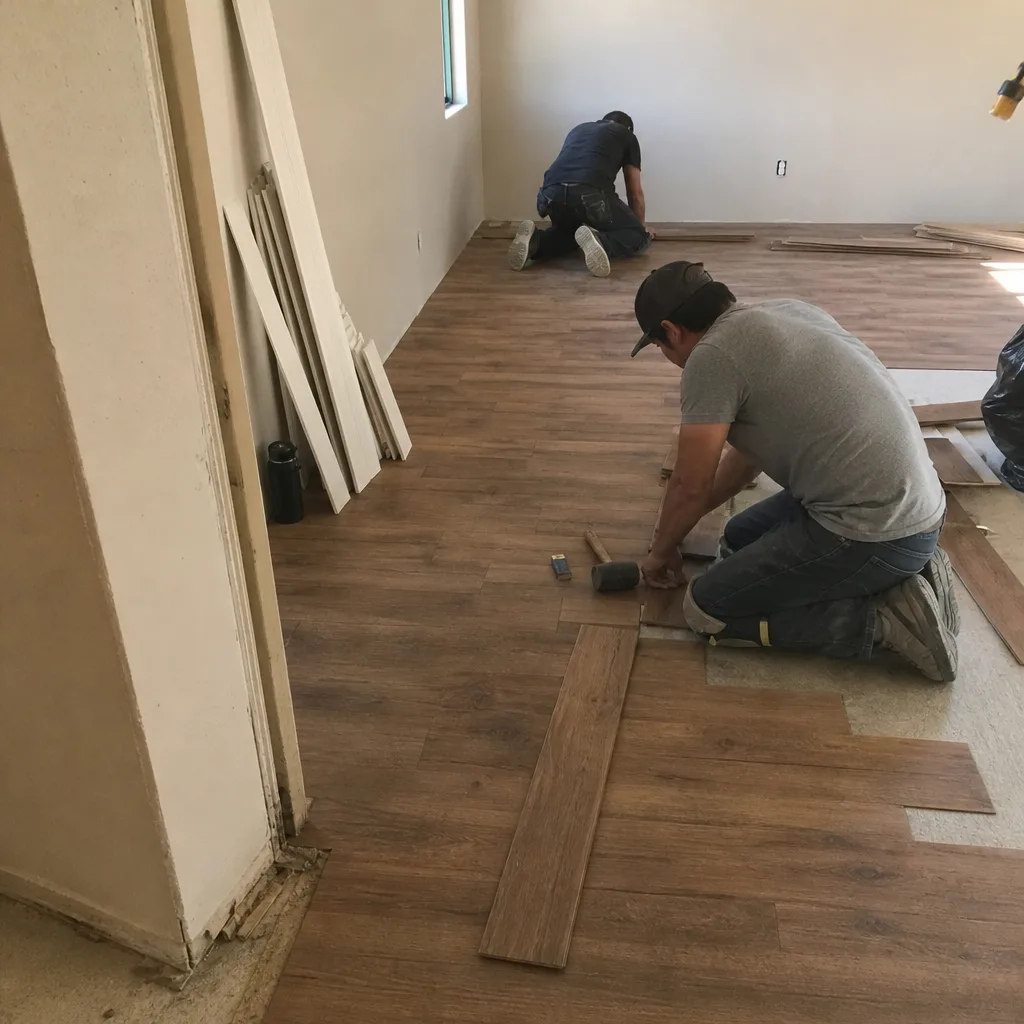
- Flooring replacement including tile, hardwood, laminate, and carpet. Removing the old floor covering and installing new does not require a permit so long as the subfloor is in good condition.
- Cabinet replacement without moving plumbing or electrical locations. If the sink stays in the same position and the same electrical circuits serve the same appliances, new cabinets alone are exempt.
- Countertop replacement in the same configuration.
- Fixture swaps like replacing a faucet, toilet, or light fixture in the same location without altering supply lines, drains, or wiring.
- Fence repair under 7 feet tall.
- Drywall patch and repair that does not involve structural framing.
The line gets crossed quickly. Replace a toilet and you’re fine. Move that toilet six inches and you need a permit because the drain location changed. Swap a light fixture and you’re fine. Add a new outlet and you need a permit. The rule is simple: if you’re changing the system’s design, not just the finish, pull the permit.
How the Sacramento Permit Portal Works
The City of Sacramento uses an online permit portal for applications, plan submittals, fee payment, and inspection scheduling. The portal handles everything from simple trade permits to full plan check for additions and major remodels. Most single-trade permits like water heaters and electrical panel replacements qualify for same-day over-the-counter approval. Structural work goes through plan check.
Typical review timelines at the City of Sacramento, in our experience:
- Over-the-counter permits: water heater, electrical service, re-roof, same-size window replacement. Same-day issuance in most cases.
- Express plan check: small additions, kitchen and bath remodels with no structural changes. 5 to 10 business days.
- Standard plan check: additions with structural work, whole-home remodels, new construction. 3 to 6 weeks depending on volume.
- Fire department review: required for any project that affects egress, sprinklers, or fire-rated assemblies. Runs concurrently with building plan check.
- Planning review: required for projects in historic districts, properties with overlay zones, or anything that changes the exterior envelope.
The difference between over-the-counter and plan check matters because it affects your schedule. A water heater replacement can be done the day the permit is issued. A room addition needs stamped drawings, structural calculations, and a plan check engineer’s approval before you can pull the permit and start digging.
For homeowners using a general contractor, the contractor handles the portal. You should still know the permit number and be able to verify the permit status online. Any contractor who won’t pull permits or asks you to pull them in your name is shifting liability onto you. A General Contractor in Sacramento who runs by the book pulls permits under their license and lists you as the property owner of record.
What Rough Framing, MEP Rough-In, and Final Inspections Actually Cover
Inspections happen at specific milestones. Each one verifies that what’s built matches the approved plans and meets current code. Skipping an inspection means the work cannot proceed to cover-up, and the inspector has the legal authority to red-tag the project and stop work until corrections are made.
Here’s what each stage covers:
- Foundation inspection: Footing depth, reinforcement steel placement, anchor bolt spacing, and slab thickness. Called after forms and rebar are set, before concrete is poured.
- Rough framing inspection: Stud size and spacing, header sizes over openings, shear wall nailing patterns, hold-down hardware, roof framing connections, and fire blocking. The inspector is checking structural integrity against the approved plans. Any deviation from the plans means correction or an engineer’s letter.
- MEP rough-in inspection: Mechanical, electrical, and plumbing systems before insulation and drywall. The inspector checks drain slope, vent placement, water line sizing, gas line installation and pressure testing, electrical wire gauge and circuit layout, duct sizing, and penetration sealing. This is where shortcuts get caught because everything is exposed.
- Insulation inspection: R-value verification, vapor barrier placement, and air sealing at penetrations. This ties directly into Title 24 compliance requirements.
- Final inspection: The complete project. The inspector verifies that all life-safety items are in place: smoke detectors, carbon monoxide detectors, egress windows in bedrooms, GFCI outlets near water sources, stair dimensions, guardrail heights, and proper operation of doors and windows. They also confirm that all previous inspection corrections were completed.
An inspector is legally allowed to red-tag any work that deviates from approved plans or fails to meet code. That means stop work. The permit is suspended until corrections are documented and re-inspected. This is not a punishment. It’s the system catching problems before drywall hides them, and it protects you from buying a house with wiring that was never checked.
Title 24 Energy Compliance in Sacramento’s Climate Zone 12
Sacramento sits in Climate Zone 12 under California’s Title 24 Building Energy Efficiency Standards. That zone designation drives specific insulation, window, and HVAC requirements for any remodel that touches the building envelope. If you’re replacing windows in Sacramento, the new units must meet a maximum U-factor of 0.30 and a maximum SHGC of 0.23. If you’re adding insulation to an attic, the prescriptive requirement in Zone 12 is R-30 when there’s less than 3.5 inches of existing insulation.
How Title 24 affects a typical Sacramento remodel:
- Window replacement: Must comply with the fenestration requirements for Zone 12. Dual-pane, low-E glass is the standard. Single-pane replacements do not comply.
- Wall insulation in new additions: R-21 batt or R-13 plus R-2 continuous insulation is the typical path. The complexity depends on whether you’re using prescriptive or whole-house performance compliance.
- HVAC replacement: New systems must meet minimum efficiency ratings and require duct testing when ducts are in attics. Leaky ducts are a significant energy loss in Sacramento’s summer heat, and the testing catches them.
- Lighting in remodeled spaces: At least 90% of permanently installed lighting must be high-efficacy fixtures. The days of unrestricted incandescent fixtures are done.
- Water heating: Tankless installations have different requirements than storage tanks in terms of recirculation and demand controls.
Title 24 compliance is documented through a registered energy consultant who runs the project through approved software and files the compliance documents with the permit. It’s not optional, and a Home Remodeling in Sacramento project without Title 24 documentation will not pass final inspection.
Handling Unpermitted Work You Inherited
Buying a house with an unpermitted addition or remodel is common in Sacramento’s older neighborhoods, particularly in areas like Tahoe Park, Colonial Heights, and parts of Oak Park where homes date from the 1940s and 1950s. When we’re called in to assess inherited unpermitted work, the first step is determining what the seller disclosed. California requires sellers to disclose unpermitted work, but disclosure failures happen, and title companies are now routinely flagging additions that don’t match the original building permit records.
The retroactive permit process in Sacramento follows a defined path:
- Documentation: Gather any records of when the work was done, who did it, and what it involved. Photographs help. If the previous owner left no records, the city will work with what’s on site.
- Hire a licensed professional to assess: The city will not issue a retroactive permit based on an amateur assessment. You need a licensed contractor or structural engineer to evaluate the work against current code. Work built to code when it was done may not meet current standards.
- Submit plans: The as-built condition must be documented and submitted. If the work is inaccessible behind drywall, the inspector will require selective demolition to expose framing, electrical, or plumbing for verification.
- Corrections: Non-compliant work must be brought up to current code. This can mean anything from adding a hold-down to replacing a subpanel to re-framing an entire wall. The range in Sacramento is wide: we’ve seen retro permits cost as little as $2,500 for a straightforward interior remodel and as much as $40,000 for a poorly built addition that required structural reinforcement.
- Final approval: Once corrections pass inspection, the city issues a permit with a certificate of occupancy or final approval. That document clears the title defect.
If you bought the house with unpermitted work and the seller failed to disclose it, you may have recourse under California real estate law. That’s a conversation for a real estate attorney. The permit itself is a construction matter, and it falls on the current owner to resolve before selling or refinancing.
What Permits Cost in Sacramento
Sacramento’s permit fees are based on the valuation of the work. The city applies a fee schedule per $1,000 of project valuation, plus flat fees for each inspection type. The numbers move with the city’s annual fee schedule, but here are the ranges we see on typical projects in Sacramento:
- Water heater replacement: $95 to $160 total including permit and inspection.
- Electrical panel upgrade: $180 to $350 depending on service size.
- Window replacement (whole house): $220 to $500 based on the number of units and the need for Title 24 documentation.
- Kitchen remodel with plumbing and electrical changes: $800 to $2,500 depending on valuation and plan check requirements.
- Bathroom remodel with layout changes: $600 to $1,800.
- Room addition (300-500 square feet): $3,500 to $8,000 including plan check, school impact fees, and inspections.
- Whole-home remodel with structural changes: $6,000 to $15,000 depending on scope.
These are permit costs only, not construction costs. The construction cost for that room addition is a separate number. What matters for budgeting: if your contractor quotes a price that seems too low, ask whether the permit and inspection fees are included. A written estimate that excludes permits is not a real number, because the work cannot legally be built without them.
Common Mistakes to Avoid
- Treating the minor repair exemption as a blank check. Replacing a faucet is fine. Moving that faucet’s supply lines through a new wall is work that requires a permit. When in doubt, check with the city’s permit counter before you open the wall.
- Letting a contractor talk you out of permits. Some contractors will tell you permits slow the job down. That’s true for a few weeks. What’s also true: if your kitchen catches fire because of unpermitted electrical work done by that contractor’s sub, your insurance company can deny the claim. In Sacramento, we’ve seen that happen more than once.
- Pulling permits in your own name to speed things up. If you pull an owner-builder permit, you assume responsibility for everything on the site, including worker injuries. You are the general contractor by law. That’s a legal liability no homeowner should carry casually.
- Covering walls before the rough-in inspection. The inspector cannot verify what they cannot see. Drywall over uninspected plumbing or electrical means tearing it open again at your own expense.
- Ignoring Sacramento’s Title 24 requirements. The energy compliance documents are not a bureaucratic formality. No Title 24 documentation, no final approval, full stop.
- Assuming the seller’s disclosure covers you. A disclosure doesn’t fix a title defect. The unpermitted work remains unpermitted until you resolve it. If you plan to sell in five years, the problem waits for you.
- Starting exterior work without checking overlay zones. Sacramento has historic districts and design review overlays where even exterior paint color requires approval. Work in those zones without review can be stopped mid-project.
See the difference
 Before
 After
After Before
 After
After Before
 After
AfterWhen to Call a Professional
If your project involves structural changes, plumbing relocation, electrical work beyond fixture swaps, or anything that changes the building envelope, you need a licensed contractor. That’s not a suggestion. It’s the threshold where mistakes become dangerous and expensive. If you’re in Sacramento and facing an inherited unpermitted addition, a contractor who has navigated the city’s retroactive permit process will save you months of back-and-forth. Use our General Contractor Maintenance Checklist for Sacramento Homeowners to vet your options. Bradford Remodeling Co Sacramento offers free estimates in Sacramento. Call (279) 226-1509 and we’ll give you a written price before any work starts, with every permit and inspection fee itemized in the estimate.
Frequently Asked Questions
A building permit in Sacramento typically runs $95 to $500 for single-trade work like water heaters or window replacements, $1,000 to $2,500 for kitchen or bath remodels, and $3,500 to $8,000 for room additions including plan check and impact fees. Call (279) 226-1509 for a written estimate that includes exact permit costs for your specific project.
You can sell a house with unpermitted work in Sacramento if you disclose it in writing, but the buyer’s lender or title company may still block the sale until the work is permitted or removed. Sacramento title companies have become more aggressive about flagging unpermitted additions during escrow over the last several years.
If the inspector finds unpermitted work from a previous project during your current remodel inspection, they can red-tag the entire project until the unpermitted work is either permitted retroactively or corrected to current code. This is common in older Sacramento homes, and it’s why we document the existing conditions before starting any remodel.
Over-the-counter permits like water heaters and electrical panel swaps are issued same-day. Express plan check for straightforward remodels runs 5 to 10 business days. Standard plan check for additions and structural work runs 3 to 6 weeks depending on the city’s current volume.
No, replacing kitchen cabinets without moving plumbing, electrical, or gas locations is exempt from permit requirements in Sacramento. If the sink stays in place and the appliances stay on the same circuits, new cabinets and countertops are considered a minor repair.
Title 24 is California’s energy efficiency building standard. Sacramento lies in Climate Zone 12, which sets specific insulation, window, HVAC, and lighting requirements. Any remodel that touches the building envelope or replaces major systems must document Title 24 compliance before final inspection will pass. Call (279) 226-1509 for guidance on what Title 24 means for your specific project.
The Bottom Line
Permits in Sacramento are a financial instrument. They protect the value of your house, keep your insurance valid, and keep you out of legal liability for work done on your property. The permit process has real costs and real timelines, but skipping it creates costs that arrive years later, during escrow, during an insurance claim, or during a future remodel. If you’re planning a remodel in Sacramento, start with the permit question, not the finish materials. If you need help, call (279) 226-1509 for a free estimate. At Bradford Remodeling Co Sacramento home, we put the price, the scope, and the permit plan in writing before any work starts, and everything we complete carries a 365-Day Done Right Promise in writing.
Written by Curtis Lane, Owner at Bradford Remodeling Co Sacramento, serving Sacramento since 2004.


